
Before the popularity of Internet access, trading was carried out by brokers manually. After the introduction of the Internet, online trading came into the share market. For obvious reasons, trading through the Internet is much easier and less time-consuming compared to offline trading. In this article, we will elaborate on the features along with the Top 6 Differences Between Online vs Offline Trading. Let’s start with the definition of each of the trading systems.
Online vs Offline Trading
Let us now discuss the differences between the 2 types of trading point-wise.
What is Offline Trading?
Definition
In offline trading, a trader can’t trade without the support of any broker. Brokers do not allow self-trade in offline trading. Here, on the client’s behalf, brokers place buy/sell orders and charge according to this. Hence, the brokerage is quite higher here. To execute orders you need to get in touch with the broker’s office every day. If the broker is unavailable for a day or two, you won’t be able to trade by yourself.
Features
Traders can trade offline through different procedures such as selling or buying shares by phone, through a portfolio manager, or directly from brokers’ places.
Trading by Phone
Only limited brokers offer offline trading by phone. Here, we are not talking about mobile apps but plain phone calls. Brokers have their representatives to trade on traders’ behalf. The entire process is manual.
So, a tele-broking service helps to buy-sell shares over a phone call. The tele-brokers not only help to execute the orders but also provides information on market depth, volume etc.
Trading Through Portfolio Manager
Many of the broking firms have qualified people who can do more than the execution of orders. Once you authorized them, they manage your complete investment portfolio.
Therefore, a portfolio manager may cost more than other trading systems but you will get a compact service.

Directly from Brokers’ Place
If traders want to trade directly from brokers’ places, it is also possible and cost-effective.
What is Online Trading?
Definition
The entire system is internet-based, here traders don’t have to depend on others, they can trade by themselves easily. Therefore, online trading is the digitized version of offline trading. Traders don’t need to visit brokers’ offices every now and then, they can operate it from home only. In order to do your job, you need not depend upon other individuals. In this digitalized age, online is more trading in comparison to the offline trading system.
Features
In this digitized age, the demand for online trading is more in comparison to offline trading.
Simple
The operation in online trading is quite simple and easy. Traders can operate their trading accounts easily through the net.
Less Expensive
As the manual effort is less here, the expense is also lower than offline trading. So, it is less expensive.
Quick and Less Time-Consuming
As the process is entirely online based, it is quick and less time-consuming.





Chances of Error are Less
For obvious reasons, the chances of error are less as it is online.
The Differences Between Online vs Offline Trading
Now, come to the main area of the content, the difference between online and offline trading. Here, we are highlighting a few differences below:
Easy Accessible Trading
Traders can trade online without any external interference. According to today’s perspective, online trading is more convenient. All you need is an internet connection and a device. Here, the transaction can be carried out within seconds.
On the other side, offline trading is carried out by brokers on behalf of their clients. Here, brokers execute their clients’ orders manually. With the popularity of the internet, offline trade becomes an obsolete concept.
Security and Risk
Online trading is less risky and more secure compared to offline. As an individual has entire control over trading, it is much safer. Traders can check their profit-loss statement, brokerage, tax, and other fees directly from their accounts. Hence, the total process is getting easier.
In offline trading, clients don’t have enough knowledge about the transaction process, here the fraud risk is higher. The entire process depends on the broker, where the broker can easily manipulate his trader. The brokerage charge, service tax, and other fees all can be highly influenced by a broker. Here, inexperienced traders can easily get deceived.
Brokerage
As traders do online trading by themselves, the cost is much lesser. As there is no direct role of a broker here, there is no huge cost attached to it. Nowadays, there are a number of brokers (discount and full-service brokers) in India. Traders who have less capital can afford discounted brokers easily.
In offline trading, brokerage charge is more as brokers trade on behalf of their clients. So, for obvious reasons, the charges are quite high. Traders
Research and Trade
The success of trading depends on how accurate the research is prior to trading. It is advisable not to depend solely on others’ analytical views. Hence, research is necessary while trading. There are mainly two types of research, fundamental and technical. For trading, technical research has the utmost importance.
In online trading, traders can do research and trade on a single platform. Technical tools like indicators, candlestick charts, oscillators, etc are important factors to analyze the market.
During trading, each security’s real-time data is important. In offline trading, there is almost no space for live-field research. Traders have to be connected with brokers all the time during trading.
Offline traders have to research on their own and then execute trades through brokers.
Real-Time Data
The term real-time data indicates information which is delivered immediately after collection. There should be no delay in the provided information. As in the stock market, each second information is valuable, real-time data plays an important role here. Traders who have more real-time data than others have more probability of making a profit.
Some of the best Real-Time data providers
In India, there are a number of paid and unpaid real-time data providers. Let us describe some of them below:
NSE Authorized Real-Time Data Vendors
The data and info-vending services of NSE are given through NSE Data and Analytics Ltd which was formerly known as DotEx International Ltd. For the capital segment, currency derivative market segment, wholesale debt market segment, corporate bond market, corporate data, securities lending, and borrowing market, it provides NSE market quotes and data.
- Global Data Feeds: Global data feeds support multiple analysis platforms like Amibroker, Metastock, NinjaTrader, Multichart, etc. Since 2010, Global Data Feeds are the leading authorized, real-time information vendor of the Indian stock exchange (NSE, MCX, etc).
- True Data: True Data provides products and services with a number of tools for decision-making and trading at quite an affordable price.
Non-NSE Real-Time Data Provider
Among the non-NSE real-time data provider, there are Amifeed, Amifeeder, Jetlivedata, etc.
- AmiFeed: The Amifeed provides fast real-time market data to Amibroker along with new advanced technologies.
- AmiFeeder and JetLive data are also almost the same as AmiFeed with different features and facilities.
- The above sites are real-time data providers while AmiBroker, NinjaTrader, Metastock, etc are trading terminals.
Online traders can do real-time data-based research while trading but during offline trading, traders can’t do research with the real-time database. This is because online, traders do research and trading at the same time by themselves. So, traders can use real-time data more accurately here. On the opposite side, brokers do trades on behalf of their customers, so it is more difficult to follow the real-time data.
Flexibility
Next, come to the point of flexibility. There is a huge difference between online and offline flexibility. Time. The transaction cost effect professional traders to some extent.
In the case of online trading, traders can operate and execute a trade from their homes only, There is no need to go to the brokers’ houses. Travelling time and cost is absent here. Apart from this, they can execute a trade from anywhere, from their phone, laptop or computer. Nowadays, the mobile app becomes popular enough among traders for quick and easy execution of the trade.
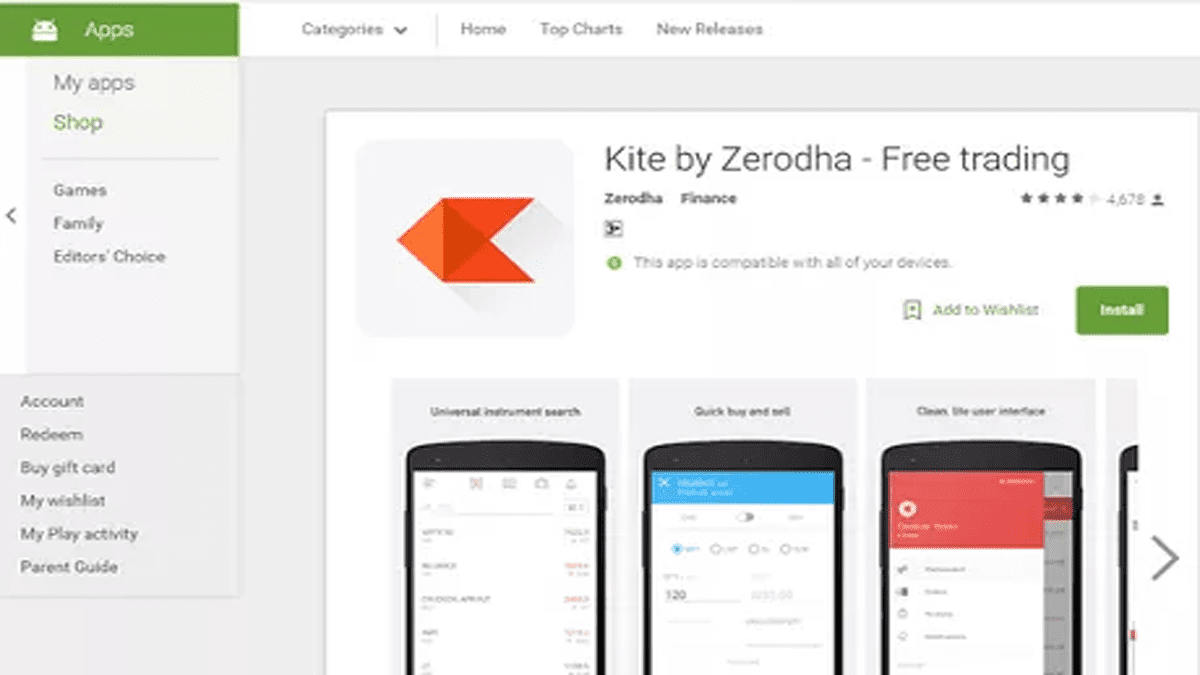
For example, Zerodha Kite can be operated through mobile. One can get buy-sell signals and calls through different apps also. Recently, we’ve also launched our intraday trading app which generates algo (automated) buy-sell calls. By using it, one can get calls from anywhere in India through mobile.
Oppositely, in offline trading, there is no facility for working from home here. Traders need to be routed through brokers.
Therefore, online trading is more flexible than offline. Traders need to visit brokers’ houses for trading while online traders can trade from home only.
Guidance Benefits
Experts’ comments are always preferable during trading. So, experience guidance is acceptable here. In the case of online trading, you may search for a number of experts’ opinions on the internet while trading. As an example, Zerodha Varsity (an online-based guide platform) provides proper online guidance.
On the other side, in offline trading, the facility is absent here. Traders need to depend on the brokers’ word-of-mouth suggestions.
Conclusion
These are some of the important points regarding online vs offline trading in the security market. In this progressive age, online trading is preferable to offline. Therefore, traders can get the maximum benefit in online trading.