
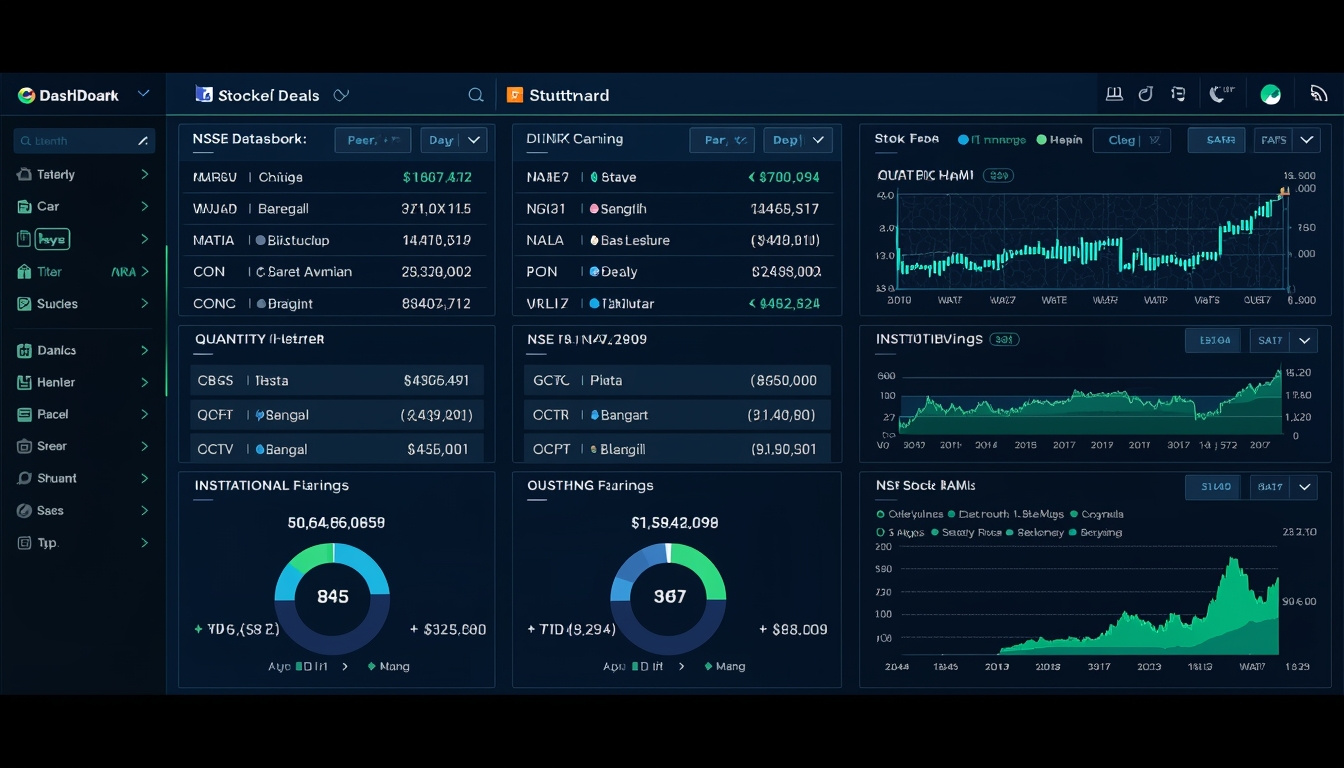
Bulk Deals Today – Track Large Stock Market Transactions
Bulk deals are large stock market transactions executed on the regular trading window of stock exchanges such as the NSE and BSE. These deals are closely monitored by traders and investors because they often involve institutional investors, promoters, HNIs, or large funds.
Many traders try to identify “smart money” movements by analysing bulk deals data. When large investors accumulate shares, it may signal confidence in a company. On the other hand, heavy selling by institutions or promoters may indicate caution.
Below, you can explore the latest bulk deals data in a clean, interactive format. Use the filters to identify buying or selling trends across different exchanges and trading dates.
The above widget displays bulk deal data fetched from exchange-reported disclosures and organized in a simple visual format for quick analysis.
What is a Bulk Deal in the Share Market?
A bulk deal occurs when the total number of shares bought or sold in a company exceeds 0.5% of the company’s equity shares on a stock exchange during a single trading day.
Key characteristics of bulk deals:
• Executed during normal market hours (9:15 AM – 3:30 PM)
• Can consist of one large trade or multiple trades during the same day
• Must cross 0.5% of the listed equity shares of that company
• Exchanges publish these deals at the end of the trading day
This rule was introduced to improve market transparency and disclosure so that retail traders can see large institutional activity in stocks.
Why Bulk Deals Matter to Traders
Bulk deals are widely tracked because they may reveal institutional activity or strategic moves by large investors.
1. Identifying Institutional Buying
If mutual funds, FIIs, or large investors accumulate shares via bulk deals, it may indicate long-term interest in the company.
2. Detecting Promoter Selling
Promoters sometimes offload shares via bulk deals. This can affect sentiment in the stock.
3. Spotting Accumulation Trends
Repeated bulk purchases over several days can indicate accumulation by institutions or HNIs.
4. Monitoring Smart Money Flow
Many traders follow bulk deals to see where “smart money” might be moving in the market.
However, it is important to remember that not all bulk deals signal bullish or bearish trends. Sometimes the buyer and seller may simply be reallocating funds or executing portfolio adjustments.
How to Use the Bulk Deals Widget
The bulk deals widget above helps you quickly analyse large transactions in the market. Follow these steps to use it effectively.
Step 1 – Filter by Exchange
Use the Exchange dropdown to view deals from:
- NSE
- BSE
- Both exchanges
This helps you focus on where the transaction occurred.
Step 2 – Filter by Action (Buy / Sell)
Select:
- Buy to see stocks being accumulated
- Sell to identify large exits
This allows you to quickly detect accumulation or distribution trends.
Step 3 – Filter by Date
Choose a specific trading date to analyse bulk deals for that session.
This is useful when reviewing stocks that moved strongly on a particular day.
Step 4 – Analyse Deal Details
Each deal card shows:
• Stock name
• Investor or client name
• Buy or Sell tag
• Quantity traded
• Trade price
• Percentage of equity traded
• Total value of the deal



The value bar visually represents the size of the deal in crores.
Step 5 – Load More Data
Click Load More to view additional bulk deals beyond the initial list.
Bulk Deals vs Block Deals
Many traders confuse bulk deals with block deals, but they are different.
| Feature | Bulk Deal | Block Deal |
|---|---|---|
| Execution | Normal market trading | Special block deal window |
| Threshold | 0.5% of company equity | Minimum value/quantity threshold |
| Timing | During regular market hours | Dedicated windows |
| Negotiation | Not pre-negotiated | Pre-negotiated between parties |
Block deals are usually used by institutions or promoters to execute very large transactions without affecting market prices.
Where Bulk Deal Data Comes From
Bulk deals data is published by stock exchanges and financial portals.
Common sources include:
• NSE bulk deals disclosure reports
• BSE bulk deals filings
• Financial portals and data aggregators
These disclosures are part of regulatory transparency measures that allow investors to track large market transactions and investor activity.
How to Interpret Bulk Deals Correctly
Many retail traders make the mistake of blindly following bulk deal activity. Instead, use these guidelines.
Check the Investor Name
If the buyer is a well-known fund or institution, it may signal strong conviction.
Compare with Price Action
Look at the stock’s price trend and volume before making conclusions.
Track Repeated Deals
Multiple bulk buys across several sessions may indicate institutional accumulation.
Avoid Blind Copying
Sometimes bulk deals involve internal transfers or arbitrage activity, not directional bets.
Example Scenarios
Scenario 1: Institutional Accumulation
If a mutual fund buys shares through bulk deals over several days, the stock may be under accumulation.
Scenario 2: Promoter Exit
Large promoters selling through bulk deals may create selling pressure in the stock.
Scenario 3: Arbitrage Trades
Occasionally, the same entity may appear as both buyer and seller due to internal fund transfers or arbitrage strategies.
FAQs on Bulk Deals
A bulk deal is when the quantity of shares traded exceeds 0.5% of the company’s total listed equity during a trading day.
Not always. Some bulk deals reflect accumulation, while others may represent selling pressure or portfolio rebalancing.
You can track them on exchange websites or using tools like the bulk deals tracker on this page.
Yes. Bulk deals are simply disclosures of large trades and do not restrict normal trading activity if proper liquidity is there.
Final Thoughts
Bulk deals offer valuable insight into large investor activity in the stock market. When combined with price trends, fundamentals, and volume analysis, they can help traders identify potential opportunities or risks.
Use the interactive bulk deals tracker above to monitor market activity and stay informed about large transactions happening in Indian stocks.