
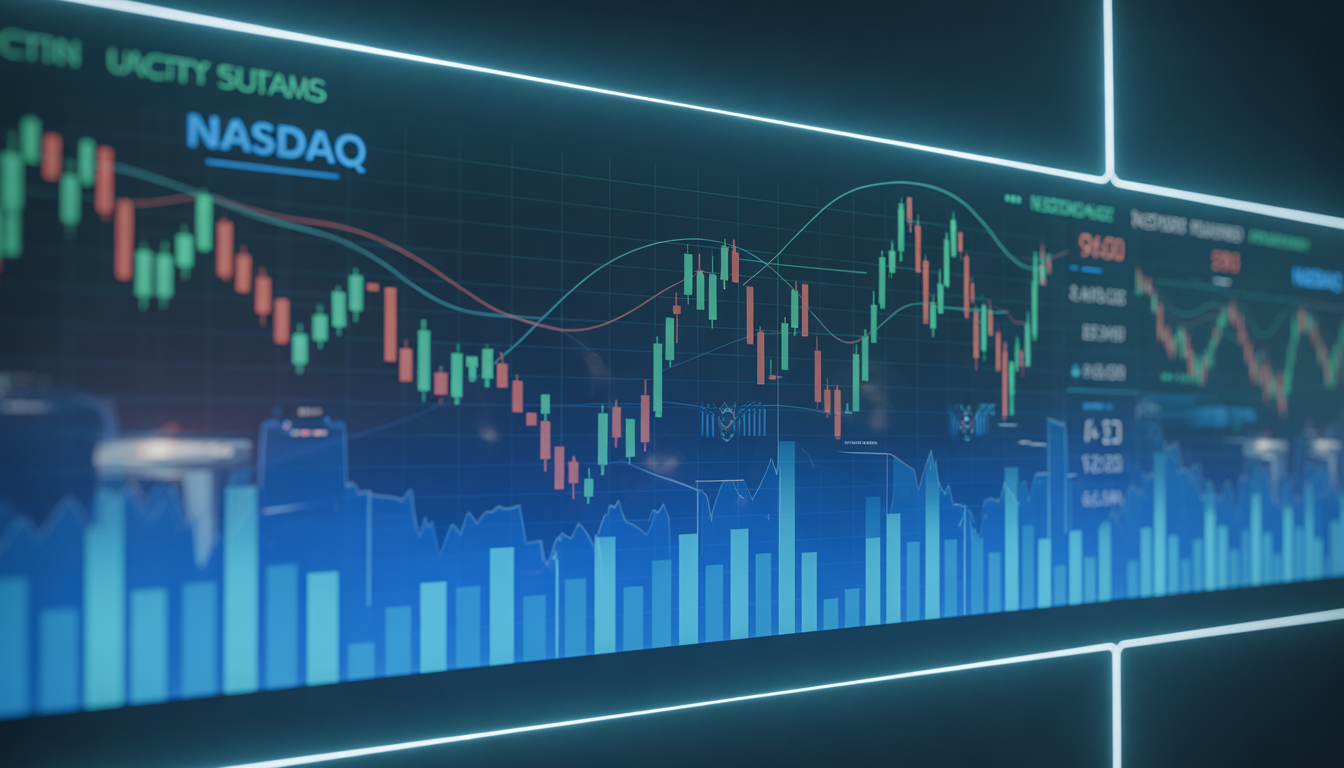
Nasdaq Futures are a key benchmark for tracking technology-driven market sentiment in the United States. Since the Nasdaq index is heavily weighted toward tech stocks, its futures contract is widely used by traders to gauge risk appetite, growth expectations, and global equity momentum. On this page, you get a complete Nasdaq Futures live trading toolkit — including live charts, multi-timeframe analysis, technical indicators, pivot levels, and a powerful signal engine designed for real-time decision making.
Live Nasdaq Futures Chart
The chart supports multiple timeframes:
- 1 Minute (1M)
- 5 Minute (5M)
- Daily
Use short timeframes for scalping and intraday entries, while the daily view helps identify broader trends.
Nasdaq Futures Live Dashboard
The dashboard combines multiple data points into a single interface:
- Live price updates
- Trend direction (EMA-based)
- RSI momentum signals
- VWAP positioning
- Buy/Sell signals
- Strength indicator
Understanding Nasdaq Futures
Nasdaq Futures reflect the expected future value of the Nasdaq-100 index. They trade nearly 24 hours a day, allowing traders across the globe to react to news, earnings, and macroeconomic developments instantly.
Because the Nasdaq is dominated by technology stocks, these futures are highly sensitive to:
- Interest rate expectations
- Earnings from major tech companies
- Global risk sentiment
- Economic data releases
This makes Nasdaq Futures more volatile compared to other indices, offering both higher opportunities and risks.
How Traders Use Nasdaq Futures
Pre-Market Insight
Before the US market opens, Nasdaq Futures indicate whether tech stocks are likely to open higher or lower.
Trend Validation
Intraday traders use moving averages and VWAP to confirm whether the trend is strong or weakening.
Momentum Identification
RSI helps determine whether price action is gaining strength or losing momentum.
Timing Entries
Lower timeframes like 1-minute charts help traders pinpoint exact entry points.
Key Technical Indicators
Exponential Moving Averages (EMA)
EMA20 and EMA50 are used to identify trend direction. A crossover of EMA20 above EMA50 indicates bullish momentum, while the opposite suggests bearish conditions.
Relative Strength Index (RSI)
RSI measures the speed and change of price movements. Readings above 60 suggest strength, while readings below 40 indicate weakness.
VWAP
VWAP acts as a dynamic support/resistance level and is widely used by institutional traders to determine fair value.
Pivot Levels for Nasdaq Futures
<div id="nasdaq-futures-pivot-widget"></div>
Pivot levels are calculated using the previous day’s price data and serve as critical zones for decision-making.
They help traders:
- Identify breakout opportunities
- Define stop-loss levels
- Determine profit targets
Signal Engine Overview
Our Nasdaq Futures signal engine uses a structured approach:
- Daily trend defines overall bias
- 5-minute trend confirms direction
- 1-minute chart identifies entry
Signal outputs include:
- STRONG BUY
- BUY
- SELL
- STRONG SELL
- HOLD
This layered method increases reliability and reduces false signals.
Trading Hours & Global Access
Nasdaq Futures trade almost continuously, making them accessible for traders worldwide. This allows market participants to react to global developments without waiting for the US market to open.
For traders in Asia and Europe, this provides a crucial advantage in understanding the US market direction ahead of time.
Market Bias Explained
Market bias is derived from trend alignment and price positioning.
- Bullish bias: Price above key averages and pivot
- Bearish bias: Price below key averages and pivot
Understanding bias helps traders align their strategy with the prevailing market direction.
Multi-Timeframe Trading Approach
Professional traders analyse multiple timeframes to improve accuracy.
Daily Chart
Defines long-term trend and bias
5-Minute Chart
Confirms short-term trend direction


1-Minute Chart
Used for precise trade execution
Combining these timeframes helps filter noise and focus on high-probability setups.
Risk Management Essentials
Trading Nasdaq Futures requires strict discipline due to its volatility.
Best practices include:
- Setting stop-loss orders
- Managing position size
- Avoiding over-leverage
- Following a structured plan
Consistent risk management is key to long-term success.
Volume & Liquidity Insights
Volume confirms the strength of price movements. High volume indicates strong participation, while low volume may signal weak trends.
VWAP combined with volume helps identify institutional activity and key price zones.
Global Influence on Nasdaq Futures
Nasdaq Futures react strongly to global events such as:
- Federal Reserve decisions
- Inflation data
- Tech earnings
- Geopolitical developments
Staying updated with these factors can improve trading accuracy.
Advanced Trading Techniques
Breakout Strategy
Trade when the price breaks above resistance with strong momentum
Pullback Strategy
Enter trades during temporary retracements in a trending market
Momentum Strategy
Focus on strong directional moves supported by indicators
Why Nasdaq Futures Are More Volatile
Compared to other indices, Nasdaq Futures tend to show sharper movements due to the dominance of high-growth technology stocks. These stocks are more sensitive to interest rates, earnings expectations, and innovation cycles.
This volatility creates:
- More trading opportunities
- Faster trend shifts
- Higher risk if unmanaged
Identifying High-Probability Setups
Successful traders focus on setups where multiple factors align:
- Trend alignment across timeframes
- Strong momentum readings
- Price near key levels (pivot/VWAP)
When these conditions align, the probability improves significantly.
Importance of Economic Events
Economic announcements such as CPI, interest rate decisions, and employment data can cause sudden spikes in Nasdaq Futures.
Traders should:
- Avoid trades before major news
- Wait for volatility to settle
- Adjust stop-loss during high-impact events
Using Nasdaq Futures for Market Prediction
Nasdaq Futures are widely used to predict market openings:
- Rising futures → bullish sentiment
- Falling futures → bearish sentiment
This helps traders prepare strategies in advance.
Combining Indicators for Better Accuracy
Using multiple indicators improves reliability:
- EMA for trend
- RSI for momentum
- VWAP for value
When aligned, signals become stronger.
Building a Consistent Trading Routine
A structured routine improves discipline:
- Review bias
- Identify levels
- Wait for confirmation
- Execute with discipline
Consistency is key to long-term success.
Final Thoughts
Nasdaq Futures offer a powerful way to track and trade global market sentiment, especially in the technology sector. With real-time data, advanced indicators, and structured signals, this page provides a comprehensive solution for traders.
Use this dashboard to stay ahead, manage risk, and make informed trading decisions.