
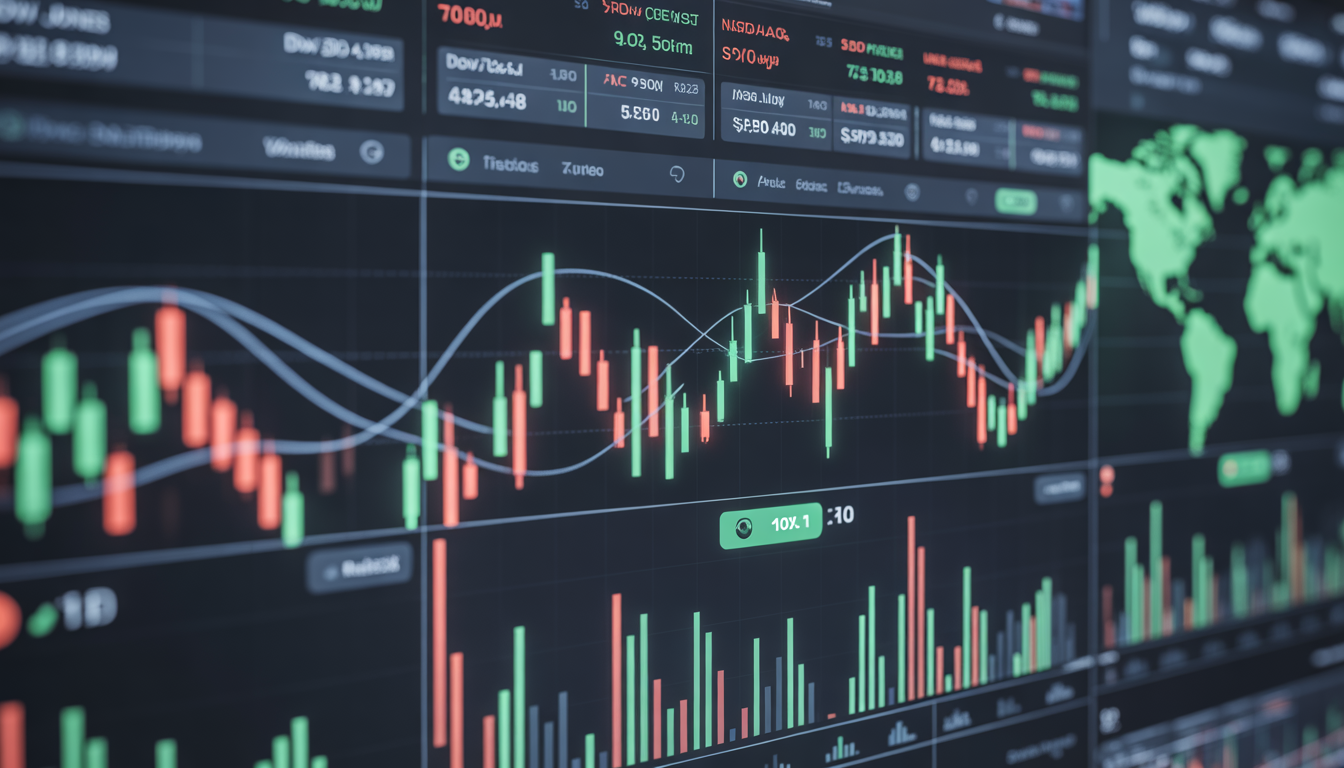
Understanding the World Indices
The global financial market is a dynamic and interconnected ecosystem where indices play a critical role in reflecting the health of economies and sectors. For investors, both seasoned and beginners, understanding world indices charts is essential for making informed investment decisions. This article delves into the significance of the world indices data, chart, their components, and how investors can leverage them to optimise their portfolios. Investors who regularly follow financial news and updates will often find comprehensive tables and charts displaying the performance of major indices. These tools, easily accessible even from your mobile, provide a snapshot of global market trends and can be invaluable in strategic decision-making.
World Indices Live – Global Markets Data & Trends
This live global markets update provides a quick snapshot of how major world indices are performing across regions, including the US, Europe, and Asia. By tracking price movements and percentage changes in real time, traders and investors can better understand global market sentiment, identify emerging trends, and make informed decisions based on cross-market momentum.
Global Stock Market Indices Today – Live World Indices Snapshot
Get a quick overview of how major global stock markets are performing right now. This world indices table tracks key benchmarks like the Dow Jones, Nasdaq, S&P 500, FTSE 100, DAX, Nikkei, Hang Seng, and more, helping you stay updated with international market trends in real time.
The table displays the latest index price along with percentage change, allowing you to instantly identify which markets are gaining or losing. Whether you are a trader, investor, or market analyst, this snapshot provides valuable insights into global sentiment and cross-market momentum.
Use this tool to monitor worldwide market movements, compare regional performance, and spot early signals of global trends that could impact your trading or investment decisions.
World Indices Chart – Compare Global Markets Performance
Track and compare the performance of major global stock market indices in one place. This interactive world indices chart lets you visualise how markets like the Dow Jones, Nasdaq, S&P 500, FTSE 100, DAX, Nikkei, Hang Seng, and others are moving over time.
Use the dropdown to switch between indices and the compare feature to analyse relative performance. When comparing two indices, the chart automatically normalises both to a base value (100), making it easier to understand which market is outperforming regardless of price differences.
You can also adjust the time frame using 1 Month, 3 Months, or Max view to study short-term trends or long-term global market cycles. This tool is especially useful for traders, investors, and analysts looking to identify global momentum, sector rotation, and cross-market trends.




What is a World Indices Chart?
A world indices chart is a visual representation of the performance of various stock market indices from different regions around the globe. These indices include major players such as the Dow Jones Industrial Average, Nasdaq, and S&P 500 in North America, FTSE 100 in Europe, and the Nikkei in Asia, among others. By analysing these charts, investors can get a holistic view of global market movements, identify trends, and assess the impact of regional economic events.
Key Components of a World Indices Chart
North America
- Dow Jones Industrial: This index is a barometer of the US economy, representing 30 major publicly-owned companies.
- Nasdaq: Known for its high concentration of technology stocks, it provides insights into the tech sector’s performance.
- S&P 500: Comprising 500 of the largest US companies, it is a broad measure of the overall market health.
Europe
- FTSE 100: A key indicator of the UK stock market, reflecting the performance of the top 100 companies listed on the London Stock Exchange.
- CAC: This index tracks the 40 largest French companies by market capitalization.
- DAX: Representing 30 major German companies, the DAX is a critical indicator of the health of the German economy.
Asia
- Hang Seng: A primary indicator of the Hong Kong stock market.
- Nikkei: Comprising 225 of Japan’s largest companies, it provides insights into the Japanese economy.
- Kospi: South Korea’s benchmark stock index.
- Taiwan Weighted Index: Tracks the performance of companies listed on the Taiwan Stock Exchange.
Other Regions
- Bovespa: The main index of the São Paulo Stock Exchange, representing the largest companies in Brazil.
- ASX 200: A key indicator of the Australian stock market.
- NZX 50: Represents the top 50 companies listed on the New Zealand Stock Exchange.
Analysing the World Indices Chart
Regional Comparisons
A world indices chart allows investors to compare the performance of indices from different regions side by side. For instance, comparing the performance of North American indices like the Dow Jones and Nasdaq with European indices such as the FTSE 100 and DAX, and Asian indices like the Nikkei and Hang Seng, provides insights into regional economic health and market sentiment.
Identifying Trends
By examining historical data and trends in world indices charts, investors can identify patterns and make predictions about future market movements. This analysis is also crucial for forecasting the stock movement and making strategic investment decisions.
Impact of Global Events
Global events such as economic policies, geopolitical tensions, and natural disasters can significantly impact stock markets. A world indices chart helps investors understand the ripple effects of these events across different regions.
Practical Application for Investors
Diversification
Investors can use world index data to diversify their portfolios by investing in different regions. Diversification also helps mitigate risks and take advantage of growth opportunities in various markets.
Timing the Market
Understanding world indices charts enables investors to time their market entries and exits more effectively. For example, identifying a downward trend in one region and an upward trend in another can guide investment decisions.
Long-Term Investment Strategies
Long-term investors can use world index data and charts to identify stable markets with consistent growth. This approach helps in building a robust investment strategy that withstands market volatility.
The Role of Technology
In today’s digital age, accessing real-time data and world indices charts has become easier than ever. Platforms like Yahoo Finance provide comprehensive data, and financial news channels like Zee Business warn us about any technical glitches in the exchanges, ensuring investors are always informed.
Conclusion
Understanding the world indices chart and data analysis is crucial for investors aiming to navigate the complex global financial markets. By analysing these charts, investors can gain insights into regional economic health, identify trends, and also make informed investment decisions. The performance of major indices such as the Dow Jones, FTSE 100, and Nikkei offers a snapshot of global market trends and economic sentiment.
In conclusion, the world indices chart and data dashboard serve as a powerful tool for investors. Whether you are a seasoned trader or a beginner investor, leveraging these charts can enhance your investment strategy and optimise your portfolio. The interconnected nature of global markets means that staying informed about regional indices is essential for making strategic investment decisions. As always, thorough research and careful analysis are key to successful investing. Your comments and discussions are welcome to take this conversation further and explore the potential of world indices charts in your investment journey.