

Are you new to the Indian stock market and want to know more about Nifty trading strategies? In this blog post, we will discuss the basics of Nifty, why it is popular for trading, and Nifty trading strategy and tricks that you can use for intraday, tomorrow, and even if you are a working professional.
Let’s begin by understanding what Nifty is and why it is popular for trading.
What is Nifty?
Nifty is the stock market index of the National Stock Exchange of India (NSE). It represents the performance of the top 50 companies listed on the exchange based on market capitalization. The Nifty index is calculated using the free float market capitalization weighted methodology. This means that the weightage of each company is based on its market capitalization adjusted for the proportion of shares that are freely available for trading in the market.
Why is Nifty Popular for Trading?
Nifty is popular for trading due to its liquidity and volatility. As it represents the performance of the top 50 companies in India, any news or events that affect these companies can impact the Nifty index. This makes Nifty an excellent instrument for traders to profit from short-term price movements by buying or selling its futures or options contracts.
Now, let’s dive into some Nifty trading strategies that you can use.
Nifty Trading Strategy and Tricks
Nifty Trading Strategies for Intraday
Intraday trading refers to buying and selling securities within the same trading day. If you are an intraday trader, you can use the following Nifty trading strategy:
Step 1: Identify the Daily Trend Using 5 and 20 Moving Average
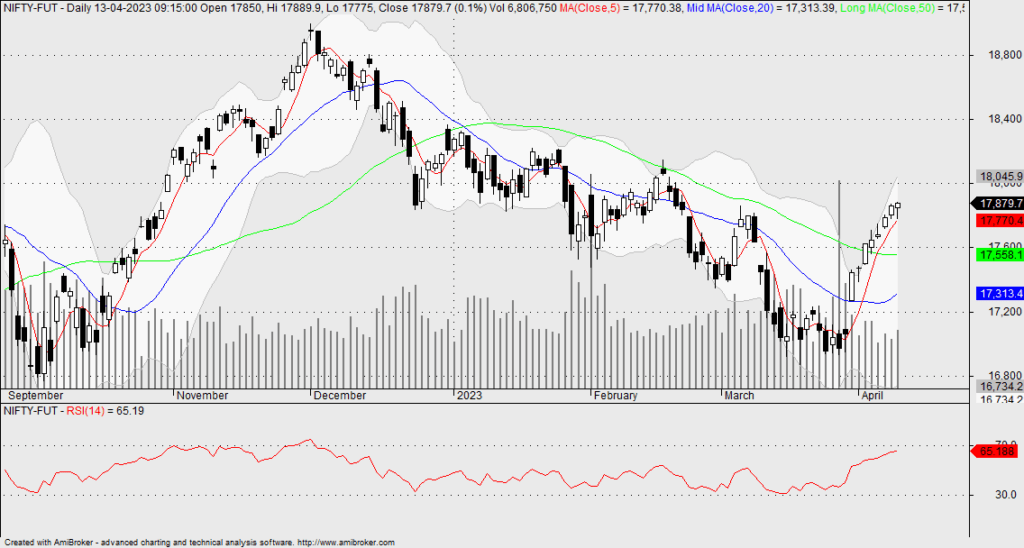
Firstly, this does not require a costly trade setup. To identify the daily trend, you can use two moving averages: a 5-day moving average and a 20-day moving average. If the 5-day moving average is above the 20-day moving average, it indicates an uptrend. Similarly, if the 5-day moving average is below the 20-day moving average, it indicates a downtrend.





In the image below as the 5-day MA is trading above the 20-day MA, we can say the index is in uptrend.
Step 2: Enter Intraday in the Same Direction as Daily Trend
Once you have identified the daily trend, you can enter an intraday trade in the same direction as the daily trend. For example, if the daily trend is an uptrend, you can buy Nifty futures or options contracts. If the daily trend is a downtrend, you can sell Nifty futures or options contracts.
Step 3: Use Extreme Levels of Stochastics or RSI to Find Entry Point
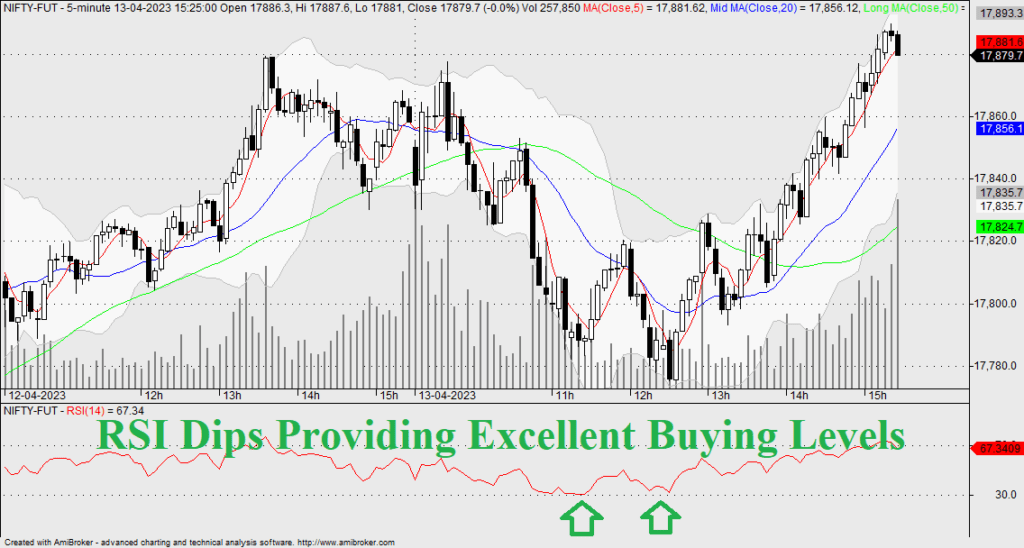
To find an entry point, you can use momentum indicators like stochastic or Relative Strength Index (RSI). The stochastic oscillator measures the current price in relation to the range of prices over a period of time. On the other hand, RSI measures the strength of price movements. If the stochastic or RSI reaches an extreme level, it indicates a potential reversal, and you can enter or exit the trade accordingly.
Nifty Trading Strategy for Tomorrow
If you are a swing trader or want to hold a position overnight, you can use the following Nifty trading strategy for tomorrow:
Step 1: Find Potential Reversal Points Using Pivot Points or Camarilla Levels
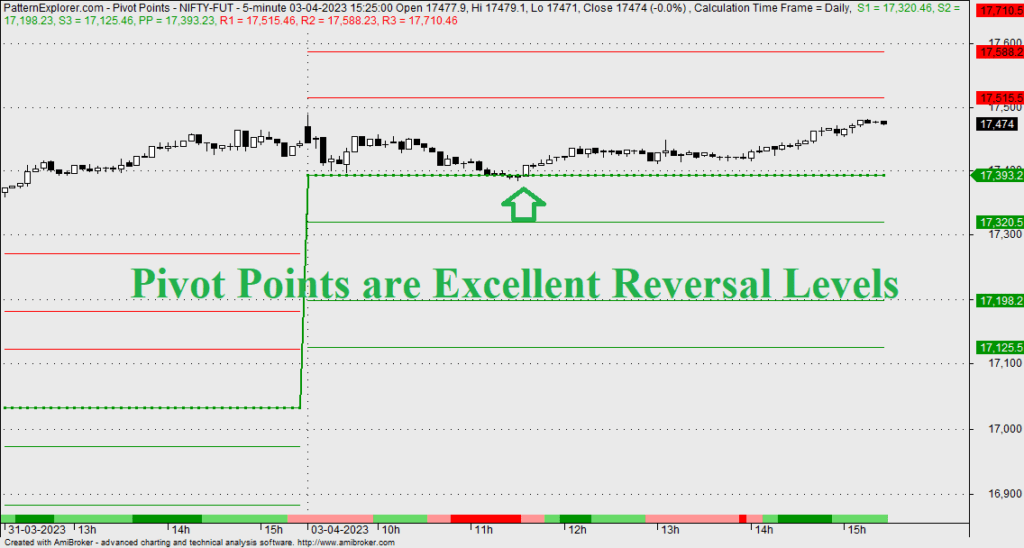
To find potential reversal points, you can use Pivot Points or Camarilla Levels. Pivot Points are calculated using the previous day’s high, low, and close prices. Similarly, Camarilla Levels are also calculated using a mathematical formula based on the previous day’s high, low, and close prices. These levels act as support and resistance levels, and you can use them to determine your entry and exit points.
Step 2: Virgin POC as a Potential Reversal Level
Virgin Point of Control (POC) is a price level where the maximum volume of trades occurred during a specific time frame. It can act as a potential reversal level, and you can use it in combination with Pivot Points or Camarilla Levels to identify potential entry and exit points for your trade.
Step 3: Use Volume to Confirm the Reversal
To confirm a potential reversal, you can use volume indicators such as On-Balance-Volume (OBV) or Volume Profile. If the volume confirms the potential reversal at your chosen entry or exit point, you can enter or exit the trade accordingly.
Nifty Trading Strategy for Working Professionals
If you are a working professional and cannot monitor the market during trading hours, you can use the following Nifty trading strategy:
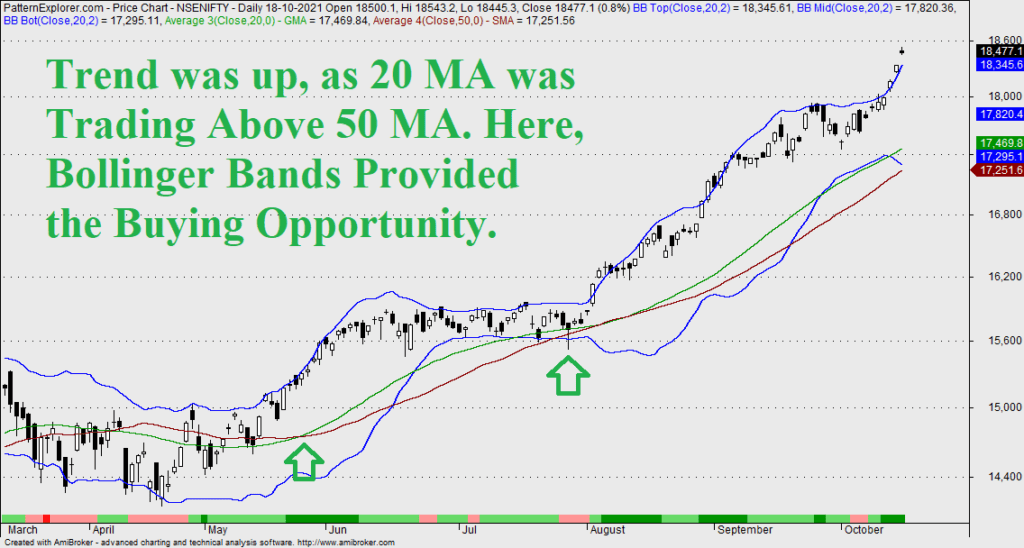
Step 1: Identify Potential Entry and Exit Points Using Moving Averages and Bollinger Bands
To identify potential entry and exit points, you can use moving averages and Bollinger Bands. Moving averages help you identify the trend, while Bollinger Bands help you identify potential price levels for entry and exit. You can set your entry and exit points based on the price levels indicated by Bollinger Bands.
Step 2: Use Stop Loss and Target Orders to Automate Your Trade
To automate your trade, you can use Stop Loss and Target Orders. Stop Loss orders automatically exit your trade if the price reaches a certain level. Similarly, Target Orders automatically exit your trade when the price reaches a certain level of profit. This allows you to enter a trade before trading hours and automate your exit strategy, freeing up your time during the day.
FAQ
Nifty option trading can be a lucrative way to profit from short-term price movements. One of the best strategies for Nifty option trading is to use the straddle strategy. This involves buying a call option and a put option at the same strike price and expiration date. The straddle strategy works best when there is high volatility, and it allows you to profit from significant price movements in either direction.
To master Nifty, you need to have a good understanding of the Indian stock market and various trading strategies. One way to do this is to learn from experienced traders or take online courses. Additionally, it’s essential to practice trading with a virtual account before investing real money in the stock market. By studying the trends and patterns of the Nifty index and honing your trading skills, you can become a master of Nifty trading.
The best time to trade Nifty options is during the first hour of trading, also known as the opening range. During this time, there is typically high volatility, which provides ample opportunities for traders to profit. Additionally, it’s best to avoid trading Nifty options during major economic events or news releases as they can significantly impact the market and lead to unpredictable price movements.
Nifty can be used for trading by buying or selling Nifty futures or options contracts. To use Nifty for trading, you need to have a good understanding of the index’s performance and the various trading strategies that can be used. Additionally, it’s essential to have a sound risk management strategy and to be disciplined with your trading approach. By using Nifty for trading and continually improving your skills, you can potentially earn a significant return on investment.
Conclusion
In conclusion, Nifty is a popular instrument for trading in the Indian stock market due to its liquidity and volatility. As a newcomer to the market, it is essential to understand the basics of Nifty trading and various trading strategies that you can use. The intraday trading strategy involves identifying the daily trend and using extreme levels of stochastic or RSI to find entry and exit points. The swing trading strategy involves using Pivot Points or Camarilla Levels, Virgin POC, and volume to confirm potential reversals. The working professional trading strategy involves using moving averages and Bollinger Bands to identify potential entry and exit points and automating your trade using Stop Loss and Target Orders.
Remember that these are just a few trading strategies that you can use, and it is essential to develop your trading strategy based on your risk appetite and trading style. Always practice risk management and never invest more than you can afford to lose. Happy trading!



Wanted to know from where can I get AFL trading code trend blaster
Harsh you can contact us here.