
The Honest Truth Nobody Tells You Before You Start
I remember a message I received from a 26-year-old software engineer from Pune back in 2019. He had opened a Zerodha account, deposited ₹50,000, bought a stock based on a WhatsApp tip, and watched it fall 40% in three weeks. His message read: “Indrajit sir, I want to learn but I don’t know where to start. Everything online is either too basic or too complicated.”
That message stayed with me — because it perfectly describes what millions of Indians face every year when they decide to enter the stock market.
If you are genuinely trying to understand how to learn stock market in India for beginners, you are already asking the right question. The very fact that you are seeking structured knowledge — rather than chasing the next “sure-shot tip” — puts you ahead of at least 80% of new market entrants in India. And I say that having mentored and onboarded over 20,000 traders since 2008 through StockManiacs.net and my broker partnerships.
Here is what nobody tells you upfront: the Indian stock market is not just a copy of Wall Street. It has its own rhythm. The Nifty 50 and Bank Nifty behave differently from the S&P 500. Circuit limits can freeze your stock during a panic. T+1 settlement means your equity trades settle the next day. FII (Foreign Institutional Investor) flows can move the entire market in a single session. Weekly F&O expiry on Thursdays creates specific volatility patterns that have nothing to do with the underlying business fundamentals of any company.
None of this gets covered in generic YouTube videos or US-focused investing books. That is why so many Indian retail traders lose money in the first year — not because the market is unfair, but because they are operating with the wrong map.
This guide is your correct map. Over the years since I began trading in 2002 and launched this platform in 2008, I have helped beginners go from zero knowledge to confident, independent traders using a simple, systematic framework. What follows is that exact framework — condensed into seven proven ways to learn the Indian stock market, step by step, without burning your capital on costly mistakes.
By the time you finish reading, you will know precisely where to start, what to study, which tools to use, how to protect your capital while learning, and — most importantly — how to build the mindset that keeps you in this game for decades, not just days.
Let’s begin.
Way 1: Understand How the Indian Stock Market Actually Works
You cannot trade what you do not understand. This sounds obvious, but most beginners skip foundational knowledge entirely and jump straight to buying stocks. That is the single biggest reason why first-year traders lose money.
The Ecosystem You Need to Know
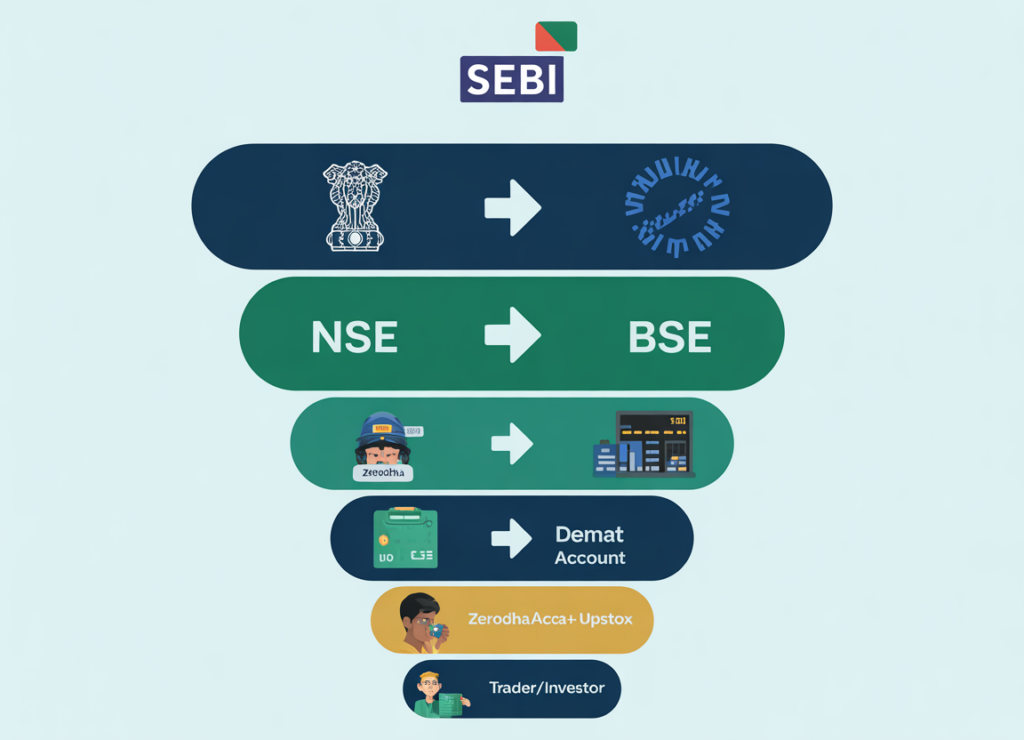
The Indian stock market operates through two primary exchanges: the National Stock Exchange (NSE) and the Bombay Stock Exchange (BSE). NSE is the larger exchange by trading volume and hosts the Nifty 50 — India’s benchmark index representing the top 50 listed companies by market capitalisation. BSE hosts the Sensex, which tracks 30 large-cap companies.
The entire system is regulated by SEBI (Securities and Exchange Board of India). Think of SEBI as the traffic police of the market. It sets the rules, monitors brokers, penalises manipulation, and protects retail investors. As a beginner, understanding SEBI’s role gives you confidence that there is a regulatory backbone protecting your interests.
Here is how a typical trade flows: You place a buy order on your broker’s platform (say, Zerodha Kite) → the broker routes it to the NSE → it gets matched with a seller → NSCCL (clearing corporation) guarantees settlement → your shares land in your Demat account the next trading day (T+1).
India-Specific Mechanics You Must Know
Several features of Indian markets differ from global norms and must be understood before trading:
Circuit filters are price bands (typically 5%, 10%, or 20%) that pause trading when a stock moves too sharply. If you own a stock that hits a lower circuit, you simply cannot sell it that day. This is a reality in the Indian mid-cap and small-cap space that no global content will warn you about.
Nifty and Bank Nifty weekly expiry on every Thursday creates a unique volatility structure in the derivatives market. Many experienced traders plan their entire weekly position around this single event. As a beginner, you need to be aware of this, even if you are not yet trading options.
FII vs DII flows drive large-scale market direction. When foreign institutions sell heavily (as they did in late 2024 and early 2025), even fundamentally strong Indian stocks can fall 20–30%. Understanding this macro dynamic prevents panic decisions.
Start with the stock market basics for beginners on this blog — it explains all foundational concepts in Indian market context. You can also explore what stock exchanges and indices truly mean before moving forward.
Practical Takeaway: Spend two dedicated weeks on market structure before placing a single trade. Know NSE, BSE, SEBI, indices, settlement cycles, and circuit filters. This foundation makes everything else faster to learn.
Way 2: Open the Right Demat and Trading Account
The account you open is your first real decision in the market — choose it wisely.
A common mistake I see is beginners picking a broker based on a random Google search or a friend’s recommendation without understanding what they actually need. Your broker is your infrastructure. A bad broker can cost you in hidden charges, poor execution, or missing features.
What You Actually Need
To trade in the Indian stock market, you need three linked accounts:
- Demat Account — Holds your shares in electronic format (like a digital locker for stocks)
- Trading Account — The platform you use to place buy/sell orders
- Bank Account — Linked for fund transfers
These three typically open together when you register with a SEBI-registered broker.
Choosing Your Broker Wisely
India’s discount broker revolution — led by Zerodha, Upstox, and Fyers — has democratised investing. Here is what matters most for a beginner:
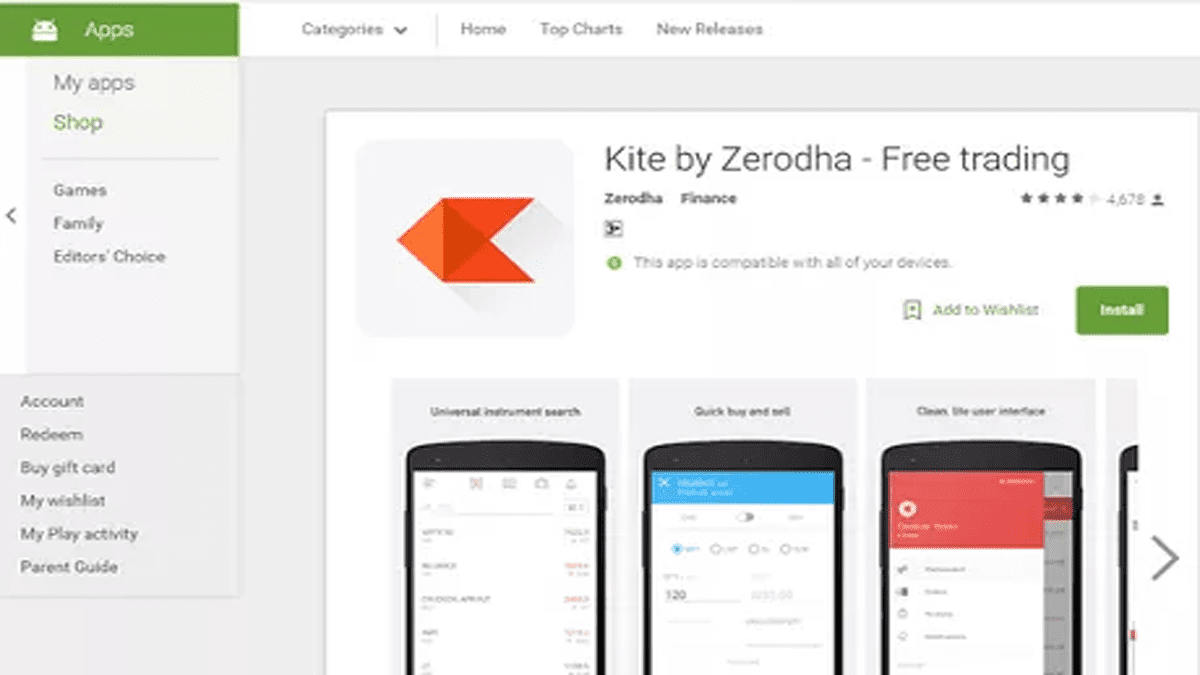
Zerodha (my long-time partner broker) is India’s largest by active client count. Its platform, Kite, is clean, fast, and beginner-friendly. The Kite mobile app is excellent for monitoring and placing orders. Zerodha also offers Varsity — a completely free stock market education platform that I recommend to every beginner. Their charges are ₹0 for equity delivery and ₹20 per executed F&O order.
Upstox (another partner broker) offers a similarly low-cost structure and is popular among younger traders for its clean UI and research tools.
Fyers is particularly powerful for those who want API access and want to build custom tools or algo-trade later — which aligns well with my advanced students.
For documents, you need your PAN card, Aadhaar card, a bank statement or cancelled cheque, and a passport photo. Most brokers complete eKYC digitally in 24–48 hours.
Read the step-by-step demat account opening procedure on this blog for a complete walkthrough. Also, understand the difference between a trading account and a demat account — many beginners confuse these as the same thing.
Practical Takeaway: Open your demat and trading account early, but do not fund it for live trading until you complete at least Ways 3 through 6 in this guide. Having the account ready lets you explore the platform, observe real market data, and use paper trading features without risking capital.
Way 3: Learn Technical Analysis the Right Way
Technical analysis is the language of price. Once you speak it, charts stop being noise and start telling you stories.

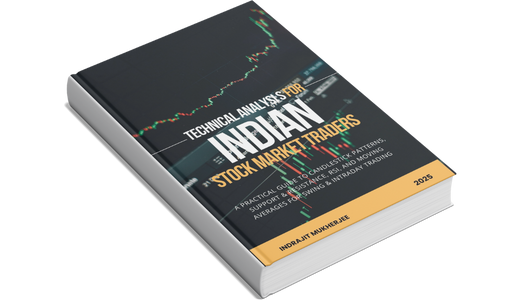


This is where most beginners go wrong — they try to learn 50 indicators simultaneously and end up paralysed. When I started trading in 2002 and later built tools using AmiBroker and MetaStock, I learned one brutal lesson: more indicators do not mean more accuracy. In fact, the opposite is often true.
Start With Price Action and Candlesticks
Before any indicator, learn to read candlestick patterns. A single candlestick tells you four critical pieces of information: the opening price, closing price, high, and low of any given period. Patterns like Doji, Hammer, Engulfing, and Morning Star have direct implications for short-term price movement — and they work across all Indian indices and stocks.
Read the dedicated guide on candlestick chart pattern analysis on this site to start building this skill.
The Three Indicators Every Indian Beginner Needs
After candlesticks, focus on just three indicators to begin with — do not let YouTube rabbit holes distract you with exotic tools:
1. Moving Average (MA): Smooths out price data to reveal the underlying trend. A 20-day EMA and 50-day EMA combination works beautifully on Nifty daily charts. When price is above both, the trend is bullish. When it crosses below, caution is warranted. Explore the complete moving average indicator guide here.
2. RSI (Relative Strength Index): Measures price momentum on a scale of 0–100. Above 70 = potentially overbought, below 30 = potentially oversold. On Bank Nifty weekly charts, RSI divergences have signalled major reversals multiple times in 2023–2025. Read the detailed RSI indicator guide to master this tool.
3. Support and Resistance Levels: These are price zones where buying or selling pressure has repeatedly shown up historically. In Indian markets, the 200-day EMA on Nifty daily charts is one of the most watched support/resistance levels by institutional traders.
Use TradingView (free version is excellent) to practice reading these indicators on real NSE/BSE data. The platform offers Indian market data natively, unlike many foreign charting tools.
And always remember — technical analysis works best when you understand the difference between fundamental analysis and technical analysis, so you know which tool is appropriate at which stage.
Practical Takeaway: Master candlesticks + moving averages + RSI on daily Nifty charts for 30 days. Study at least 3 months of historical data before applying any indicator to live trading decisions.

Way 4: Master Risk Management Before You Risk Real Money
You can be wrong about the market 50% of the time and still profit — if you manage risk correctly. I have seen technically brilliant analysts blow up their accounts because they had no risk discipline. And I have seen mediocre traders build consistent wealth simply because they never let a single loss destroy their capital.
Risk management is the single most important skill in trading, and it is almost never taught to beginners. Let me change that.
The 1% Rule and Position Sizing
The professional way to approach risk is simple: never risk more than 1–2% of your total trading capital on a single trade. If your account is ₹1,00,000, your maximum loss per trade should be ₹1,000–₹2,000.
Here is how it works in practice:
Scenario: You are buying Reliance Industries at ₹2,800. Your stop loss is ₹2,750 (₹50 risk per share). Your account is ₹2,00,000. You are willing to risk 1% = ₹2,000. Position Size = Risk Amount ÷ Risk Per Share = ₹2,000 ÷ ₹50 = 40 shares.
This calculation — and not “how much does this feel right” — is how professional traders determine their trade size every single time.
Understanding the Risk:Reward Ratio
Never enter a trade where your potential loss is greater than your potential gain. A minimum 1:2 risk-reward ratio means if you risk ₹1,000, your target profit must be at least ₹2,000. Read the detailed explainer on understanding risk-reward ratio in trading — it will change how you look at every trade.
Also, always use a stop loss on every trade. Not a “mental” stop loss — an actual order placed in the system. Markets can move fast, especially around RBI announcements, quarterly results, or Nifty expiry days. Read what is stop loss in stock market for a thorough understanding.
| Win Rate | Risk:Reward | Total Trades | Winners | Net P&L (₹1,000 risk/trade) |
|---|---|---|---|---|
| 50% | 1:1 | 10 | 5 | ₹0 (Break-even) |
| 50% | 1:2 | 10 | 5 | +₹5,000 profit |
| 50% | 1:3 | 10 | 5 | +₹10,000 profit |
| 40% | 1:3 | 10 | 4 | +₹8,000 profit |
| 40% | 1:2 | 10 | 4 | +₹4,000 profit |
This table illustrates why a trader with only a 40% win rate can still be highly profitable — provided the risk-reward ratio is disciplined.
Practical Takeaway: Before every trade, calculate: (1) Where is my stop loss? (2) What is my position size based on 1% risk? (3) Is my target at least 2× my risk? If all three answers are not clear, do not enter the trade.
Way 5: Use the Right Learning Platforms — Free and Paid
Not all learning resources are created equal. Many are designed to sell you something, not educate you.
Having spent over two decades in Indian markets and having reviewed hundreds of courses and resources on StockManiacs.net, I can tell you with complete confidence: the best learning resources for Indian stock market beginners are either free or very low cost. You do not need to spend ₹50,000 on a "premium mentorship" to learn the basics.
Free Resources That Genuinely Work
Zerodha Varsity (zerodha.com/varsity) is India's most comprehensive free stock market education platform. It covers everything from stock market basics to options theory to quantitative analysis — written specifically for Indian market context. I recommend every beginner I mentor to complete Modules 1 (Introduction to Stock Markets) and 3 (Technical Analysis) before anything else.
NSE Pathshala — the NSE's own education portal — offers structured learning modules and even certification exams. The NSE Pathshala tutorial post on this blog walks you through how to use it effectively.
This very blog — StockManiacs.net — has been publishing India-specific stock market education since 2008. My posts on how to learn stock market trading in India for free and the top 5 stock market courses for beginners in India curate the best available options with honest reviews.
When Paid Courses Make Sense
A paid course makes sense only after you have exhausted the free resources and are looking for live mentorship, backtested trading systems, or India-specific advanced strategies. Look for courses that offer:
- SEBI-registered instructors or certified market analysts
- Live market practice sessions (not just recorded theory)
- India-specific content covering Nifty, Bank Nifty, F&O mechanics
- A community for ongoing Q&A
Beware of any course that promises "guaranteed returns" or a "secret formula." These are red flags. Real education teaches you process, not predictions.
Also remember: the best traders in India are continuous learners. I still spend time every week exploring new tools, updating my AmiBroker and Python-based screeners, and reviewing what the market is teaching me. Learning is not a one-time event — it is a career-long habit.
Practical Takeaway: Start with Zerodha Varsity + StockManiacs.net. Keep a dedicated learning journal where you note every new concept you study and one practical application from each lesson. Learning without application is just entertainment.
Way 6: Practice With Paper Trading Before Going Live
Would you sit behind the wheel of a car on a highway without having practiced in an empty parking lot? Of course not. Trading works the same way.
Paper trading — also called virtual trading or simulated trading — is the practice of placing trades without real money, using real market prices. It is the bridge between theoretical knowledge and live trading, and skipping this step is one of the most costly mistakes beginner traders make.
How to Paper Trade in Indian Markets
Several platforms support paper trading with real NSE/BSE data:
TradingView has a built-in paper trading simulator that lets you place orders on real live charts. This is excellent for practising entries and exits on Nifty or individual stocks without capital risk.
Sensibull (options paper trading) is invaluable if you plan to eventually trade Nifty or Bank Nifty options. You can simulate complex strategies including straddles, strangles, and spreads — complete with realistic P&L tracking including premium decay (theta).
For those interested in systematic approaches, I have seen students use AmiBroker's Backtesting engine to test their strategies on years of historical NSE data — which is far more rigorous than live paper trading. Even with basic AmiBroker AFL knowledge, you can run a 5-year backtest on a moving average crossover strategy and see how it would have performed across different market phases (2020 crash, 2021 bull run, 2022 correction, 2023–2024 recovery).
What to Track During Paper Trading
Paper trading only builds real skill if you treat it like real money. Keep a trading journal that records:
- Date, instrument, entry price, stop loss, target
- Reason for trade entry (which setup triggered it)
- Actual outcome vs. expected outcome
- Emotional state during the trade (were you impatient? fearful?)
Review this journal weekly. You will quickly identify patterns — both in the market and in your own behaviour — that no textbook or course can reveal. Consider reviewing the intraday trading checklist here to build this daily discipline systematically.
Paper trade for a minimum of 60 days with consistent daily review before considering live trading. When your paper trading results show a positive expectancy over at least 50 trades, you have built enough of a foundation to allocate real but small capital.
Practical Takeaway: Set up a free TradingView paper trading account today. Trade only one instrument — Nifty 50 spot tracking a large-cap ETF — for your first 30 days. Mastery of one instrument beats confused exploration of twenty.
Way 7: Build the Mindset of a Consistent Trader
Every trading strategy fails in the hands of a trader who cannot control their emotions. Every simple strategy succeeds in the hands of a trader with iron discipline. This is the most underrated truth in the entire learning journey.
I have watched this pattern play out consistently over 20+ years: technically knowledgeable traders who blow up accounts because of emotional decisions, and systematic traders with simple strategies who quietly compound wealth. The difference is almost always psychological.
The Three Emotional Enemies of Indian Retail Traders
FOMO (Fear of Missing Out): This is the most dangerous force in the Indian market. When Nifty rallied 1,200 points in three consecutive sessions in late 2023, thousands of retail traders jumped in at the top — only to see a swift reversal. FOMO-driven entries almost always happen at the worst possible price. The discipline to sit on your hands and wait for your setup is a learnable skill, not a personality trait you either have or don't.
Revenge Trading: After a stop loss is hit, the urge to immediately re-enter and "recover" the loss is overwhelming. This is called revenge trading, and it is the fastest way to turn a ₹5,000 loss into a ₹25,000 loss in a single session. Every professional trader I know has a rule: after two consecutive stop losses, trading stops for the day.
Overconfidence After a Winning Streak: Three profitable trades in a row creates a dangerous illusion of mastery. Position sizes start to balloon. Risk management gets "temporarily" relaxed. And then one bad trade erases weeks of profit. Humility — specifically, the humility to follow your rules regardless of your recent streak — is a trading superpower.
The trading psychology techniques for enhancing your performance article on this site provides practical mental frameworks used by professional traders. I also highly recommend reading the section on why most traders fail — it is an honest, India-specific analysis that most platforms are too commercial to publish.
Building Your Personal Trading Rules
Every consistent trader operates with a written set of personal rules. Yours might look like this:
- I will risk no more than 1% of capital per trade
- I will not trade in the first 15 minutes after market open (high volatility, erratic price action)
- I will not hold options positions overnight
- I will stop trading after two consecutive losing days
- I will review my trades every Sunday evening without exception
Writing rules is easy. Following them when the market is moving and your P&L is flashing red — that is the actual skill. Start small, stay consistent, and let compounding do the rest.
Practical Takeaway: Write your personal trading rules before you invest your first rupee. Put them next to your monitor or set them as your phone wallpaper. Your future profitable self will thank your rule-following present self — every single time.
Conclusion: Your Stock Market Learning Journey Starts Today
Learning how to navigate the Indian stock market is not a sprint — it is a structured, patient journey. The seven ways covered in this guide are not theoretical advice from someone who has never traded. They are the exact steps I have recommended to over 20,000 traders and investors since 2008 — tested through bull markets, bear markets, crashes, rallies, budget days, RBI policy shocks, and global crises.
Let me leave you with a realistic picture of what this journey looks like:
In Month 1, you focus on understanding market structure — how NSE, BSE, SEBI, and the settlement system work. You open a demat account, explore your broker platform, and start studying candlestick patterns.
In Months 2 and 3, you dive deeper into technical analysis — moving averages, RSI, support and resistance. You study historical charts on TradingView every day, identifying setups in hindsight before trying to spot them in real time.
From Month 3 to 6, you paper trade consistently. You keep a journal. You use the position size calculator above before every simulated trade. Last but not least, you study risk management deeply and develop your personal trading rules.
From Month 6 onwards, you begin live trading with small capital — perhaps ₹20,000–₹50,000 — focusing on only one or two setups you understand deeply. You make mistakes. You lose some trades. But because your risk management is tight, no single mistake can seriously damage your capital or your confidence.
This is not the fast path. The fast path is what the Telegram group is selling — and it leads straight to losses. This is the real path.
The resources are all here, ready for you. The stock market basics for beginners section will ground you. The indicator guides, the risk management explainers, the trading psychology articles, the strategy breakdowns — all of it has been written specifically for Indian markets and Indian retail traders, not adapted from some US-focused textbook.
You have the guidance. You have the tools. The only thing left is the decision to begin — systematically, patiently, and with clear eyes about what this journey actually requires.
The market rewards preparation and punishes impatience. Be prepared.