

The Return on Equity Ratio indicates the profitability of a company. It evaluates the profit-making scenario by using shareholders’ equity. ROE interprets how much profit a company generates by using each rupee from shareholders’ equity. Although the ratio doesn’t necessarily reveal the entire financial movements of a company, it certainly helps investors to evaluate a company’s value and growth to some extent.
How to Calculate the Return on Equity Ratio?
ROE calculation consists of two main points: net income or profit of a company and shareholders’ equity. Here net income means the profit of a company for a fiscal year. In order to calculate ROE net income is to be divided by shareholders’ equity. The formula of the return on equity ratio is as follows:
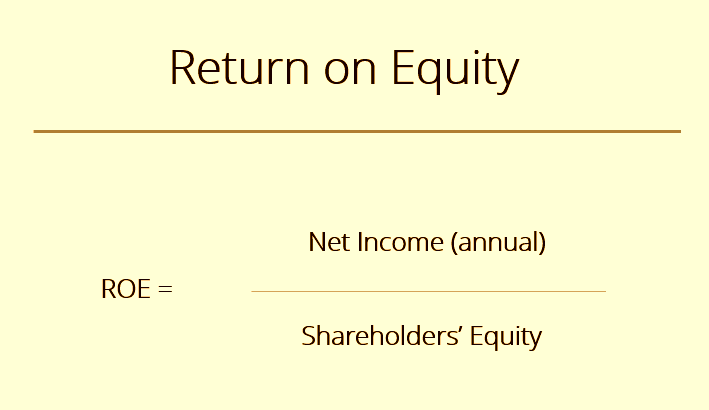
Here net income indicates profit after tax for one fiscal year. Basically, the ratio shows how much profit a company can generate from each shareholder’s equity.
Why Return on Equity Ratio Is Important?
- ROE ratio interprets how efficiently a company uses shareholders’ money to generate maximum profit.
- Generally, it helps fundamental analysts to find profitable stocks.
- The higher the ROE ratio, the more efficient the company is in using shareholders’ equity
- Investors would like to prefer the high return on equity ratio of a company for a profitable return.
In this context, one thing is quite important the comparison of return on equity ratio should be done within the same industries.





How to Interpret Return on Equity?
Positive ROE:
It interprets the company as well organized at generating shareholders’ returns and how wisely a company can invest the amount and increase productivity and profit. It also shows the company can generate more assets to cover its liabilities. Therefore, undoubtedly it is a safe investment choice.
Negative ROE:
In contrast, a decreasing ROE means the company is making a poor decision and their equity management efficiency is not good at all. So it is clear that a company with negative ROE has more debt and is not good for parking investors’ money.
Return on Equity Ratio Rates
As I mentioned lower ROE ratio is not good for investing. Hence, investors generally prefer a company with a high ROE ratio. There is a certain scale by which one can measure the high and low ROE ratios. Generally, a minimum 15% ROE indicates better valuation and profitable stock. On the other hand, below 10% ROE considers a poor rate for a company.
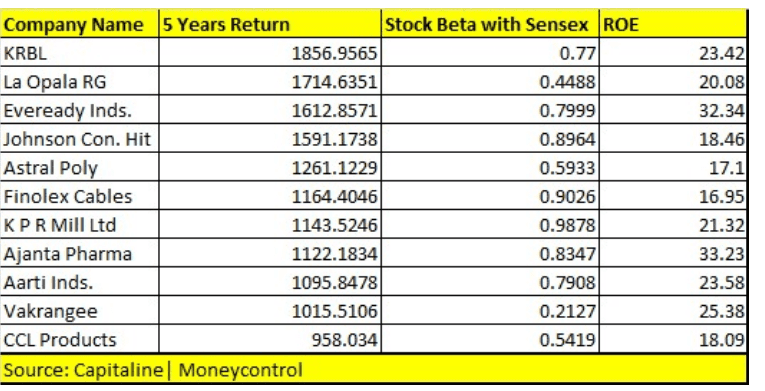
This chart shows ROE rates of more than 15%. So, according to the chart 33.23 rates consider more profitable. One of the most important points regarding ROE ratio analysis is an average of 5 to 10 years of ROE ratio gives a better picture of the growth of a company.
FAQ
The return on equity (ROE) ratio is a financial metric used to measure how profitable a company has been relative to its total shareholders’ equity. It measures the rate of return generated by a business through its reinvestment opportunities and financing decisions over time.
There isn’t an exact number that constitutes an ideal ROE. It largely depends on what industry or sector you’re looking at and whether or not certain assets or liabilities make up a large portion of the company’s balance sheet. Generally speaking, higher ratios indicate that more profit was earned against each dollar invested in the company from shareholders’ funds.
A higher Return-on-Equity ratio typically indicates strong performance for a given business entity as long as its use of debt levels remains healthy and prudent overall. Investors are likely to interpret high returns favorably when evaluating stock values. While low returns might reflect inefficient management practices with available resources which could dampen market demand.
It means that if your business had $100 worth of shareholder investments into it, then after expenses were taken out, your net profit would be equal to $20 dollars – thus reflecting an impressive 20% Return-on-Equity statistic in comparison with associated investment costs incurred by those same investors previously entering into these transactions within this award timeframe period instead.
Conclusion
In conclusion, ROE, or Return on Equity Ratio is an important fundamental indicator to evaluate a stock. A value of the indicator above 15% identifies good investment bets. However, relying solely on ROE for investment is not safe but this indicator is certainly an important tool in terms of investment.