
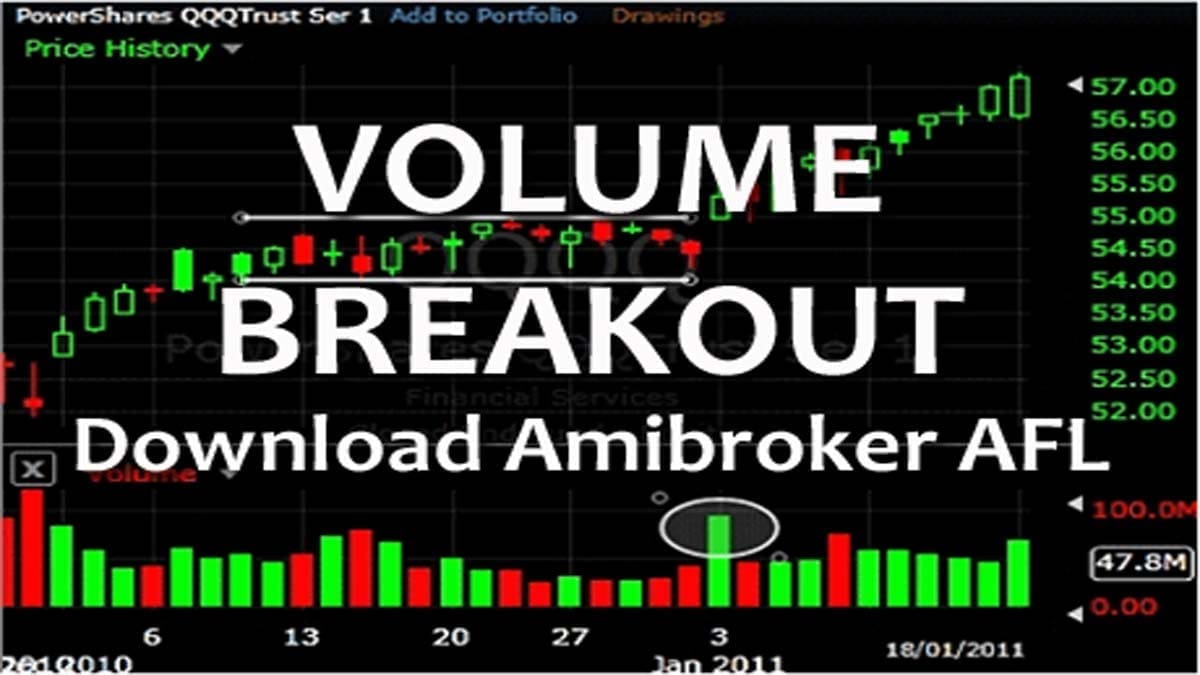
In order to trade in the stock market, real-time data is necessary during trading. Traders need to follow the trend in the market. Price fluctuation is not the only important factor, the volume also plays a significant role in the technical analysis of a stock. Though, the article will cover volume breakout, before starting let’s have a quick look at the definition of volume.
What is the Volume in Stock Market?
Trading volume or volume is nothing but the entire amount of a security that was traded during a specific period of time. In more simple words, volume interprets the number of shares that change hands between buyers and sellers during a particular time span. In the case of volume analysis, you have to come across the term average volume. This is calculated by the total amount of trading divided by the length of the period.
Now, move on to the main topic of today. We are going to start with the meaning of the volume breakout.
What is a Volume Breakout?
Some traders focus only on the price breakout pattern in order to find out the entry-exit point and support-resistance level. But this is a wrong approach. You need to co-relate a few factors together with price. They are volume, indicators, oscillators, etc that will give you an accurate analytical view. Just like price, in volume also breakout happens quite often. Traders have to identify them prior to any continuation or reversal of the trend. Generally, volumes tend to go in a certain range or way, an abrupt or sudden increase in volumes refers to volume breakout.







There are certain strategies that come under volume breakout. Among them, Volume Spike is the most important breakout strategy of volume. From here, we will go through the topic. At the end of the topic, you get an AFL Code for AmiBroker which will help you to find out the spikes in the volume.
Volume Spikes
In a normal range, an abrupt sharp rise in volume considers a volume spike. The spikes are easily identifiable. A spike in volume may indicate a bullish or a bearish trend. When everyone wants to get out of a stock by selling it, a bearish trend appears and the opposite happens with a bullish trend. Traders can identify the trends by using colored volumes also.
In order to avoid a false signal, you may apply indicators and oscillators while analyzing volume and price.
Real-Life Example of Volume Breakout
To clarify the subject in an easy way, an example is attached below:

The above chart is taken from the Amibroker charting platform. The script is on Adani Enterprises’ daily chart. I highlight the area of spikes. As you can notice, before appearing in the bullish trend, a sudden long spike arises in the normal range of the volume. The spike indicates an upcoming bullish trend. Now, look at the second spike I have highlighted. The second spike comes prior to the downfall of the price, indicating a long upcoming bearish trend in the market. Remember one thing, if a spike comes after a downfall in price, the price generally goes up after that. and vice versa.
Download Volume Breakout Amibroker AFL Code
At the beginning of the article, we promised to give a free Amibroker AFL Code to find out the volume breakout. Click on this link to download the AmiBroker AFL. By applying the code in the Amibroker, you will get an instant detail of volume breakout on your selected security.
FAQ
A good volume for a stock’s price breakout would be at least 50% higher than its previous average traded volumes. This indicates increased buying or selling activity in the stock, which could result in an extended move.
Breakout volume can refer to the sudden increase in the trading of security when it trades above or below key technical levels such as support and resistance levels. When prices rise with high volume, it suggests that traders are definitely bullish on the stock. Conversely, if prices fall with high-volume selling, investors are clearly bearish.
The volume breakout of a particular stock refers to how many shares were traded when its price made either an upside (breakout) or downside (breakdown) action within days or weeks from key support/resistance level marks. Higher than normal trading activities suggest that the share has found renewed interest among institutional traders/investor groups and could indicate further future trends.
Low-volume breakouts occur when there isn’t enough buyers’ / seller’s momentum to effectively push through certain technical resistance/support levels. This results in only small short-term moves over these thresholds before fading out again. This ultimately leads back towards their original direction range movement setup prior to breaking out points. Such kinds of breakouts usually satisfy day traders looking for quick profits going both long & short side but work poorly from medium – longer-term investing perspective scenarios.
Conclusion
In conclusion, a volume breakout is a useful and popular trading strategy that can be used to take advantage of sudden developments in the market. It requires careful analysis of price and volume data to identify potential breakouts ahead of time. This allows traders to capture significant profits if they’re able to act quickly enough. Although this strategy may not always work perfectly, it certainly holds promise for anyone who’s interested in taking advantage of intraday movements.