

In our last post, we understood what Book Value is. Now once again, price-to-book value ratio significance is another vital concept for evaluating stock price. In order to understand the P/BV ratio, we need to convey some brief information about book value and market value separately.
What is the Price to Book Value Ratio?
Price to book value ratio refers ratio of current market value and book value. It guides investors to evaluate a company’s market value relative to its book value.
Market Value vs Book Value
Market value is the current worth of stocks while BV interprets the actual worth. Book value reflects a stock’s fair value but market value indicates the current estimated value based on the current trend and the quotes received from the stock exchange. Market value is generally higher than book value but one can not pre-decide it.




Calculation of the Price to Book Value Ratio
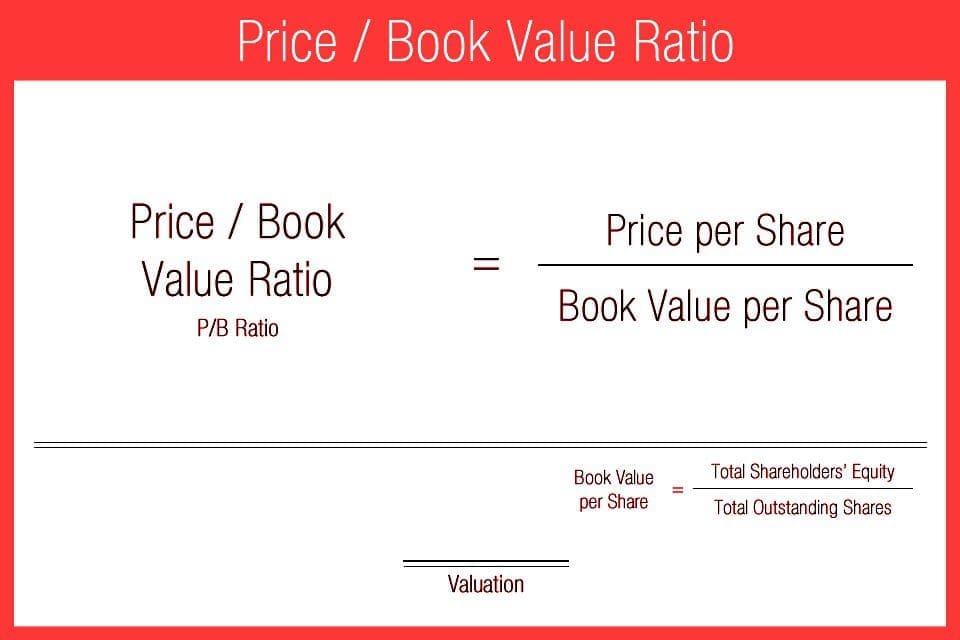
Therefore, we calculate the price-to-BV ratio by dividing the current market value by the last quarter’s book value per share. This is basically a comparison to evaluate the undervalued and overvalued stocks. A comparison should be placed between the same sectors. So before calculating the price-to-book value ratio, we must first learn the concept of book value and market value.
How to Interpret the Price-to-Book Value Ratio?
If the price-to-BV ratio is less than 1.0, the stock is undervalued and if the price-to-book value ratio is more than 1.0, it is overvalued. Though generally it is advised not to buy overvalued stocks, we should not always decide based on the price-to-book ratio. Sometimes investors go for overvalued stocks by evaluating a company’s future. Investors generally avoid underrated stocks but if a company’s future perception is clear and profitable, underrated stocks are also worth buying. Following are some points about the price to book value:
Price-to-Book Value Ratio Significance
- It is useful to calculate the fair value of the stock.
- By comparing the final amount one can predict the current market scenario.
- We generally use this ratio for liquid assets such as investment, finance, banking, insurance, etc.
- It is best to compare the P/BV ratio within the same industry.
Real-Life Example of Price-to-Book Value Ratio
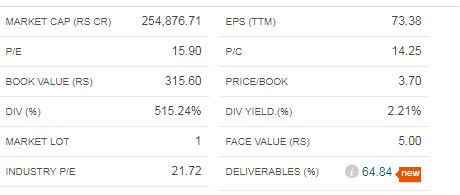
This is the current chart of the Infosys share price. The current market value of each share in Infosys Ltd. is Rs. 1171.25 and the book value per share is Rs. 315.60. So the price-to-book value ratio is (1171.25 / 315.60)= Rs. 3.70. As per this example, Infosys is also currently quoting as overvalued.
FAQ
The Price-Earnings (P/E) ratio measures a company’s current share price relative to its earnings per share. The Price-to-Book (PB) ratio compares a stock’s market value to its book value, which is the total assets minus liabilities. Both can be used to assess a stock’s valuation and potential for future growth.
A high price-to-book ratio could signify that investors are expecting significant further growth in the business or it could mean that the shares are overvalued.
Generally speaking, investors generally prefer stocks with lower ratios as they’re usually cheaper and provide more upside potential. However, some companies do have very high ratios due to their solid financial performance and expected future growth prospects. It all depends on individual investor risk appetite, goals, and preferences when judging if one particular PB Ratio is “better” than another.
Generally speaking, having an above average Book Value compared with other firms within the same sector would indicate the strong relative financial health of your chosen firm/stock; however, this still needs consideration alongside fundamentals such as cashflows & profits before investing decisions can be made safely – so depending on the context, every stock will need individual investigation prior to any investment decisions being taken confidently.
Whether 2 is considered ‘good’ depends largely on what industry/sector you’re dealing with – so checking other comparative stocks within that sector by viewing their respective Price To Book Ratios will give an indication of ‘value’. In comparison terms then yes, anything lower than 3 may represent decent ‘value’.
Conclusion
So, it is clear that the price-to-book value ratio has major significance in the field of investment and especially in fundamental analysis. In the case of market valuation, it plays a significant role. Investors need to analyze it properly for evaluating a company.