
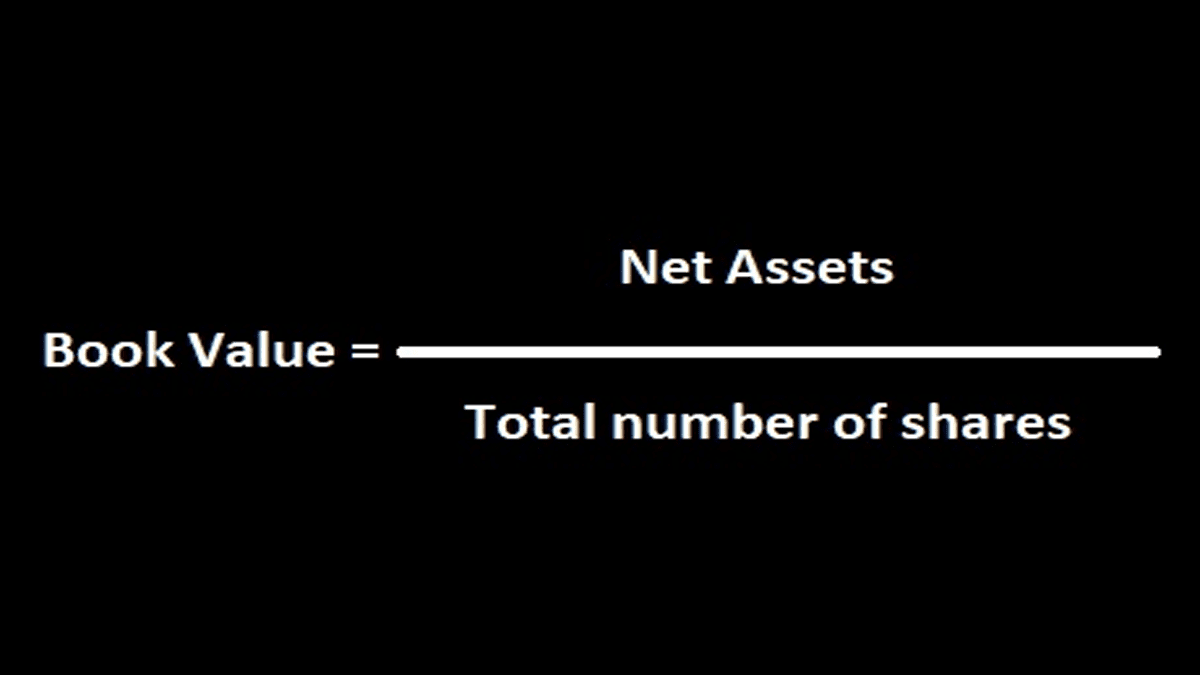
The book value or BV per share is an indicator to determine the equity relative to the market value. Book value is often called accounting value too. As book value and market value are used so often as investment terms, there can be confusion. It should be clear that there is no direct connection between BV and market value. They two are completely different aspects. Book value per share meaning is a very vital concept here.
Book Value per Share Meaning
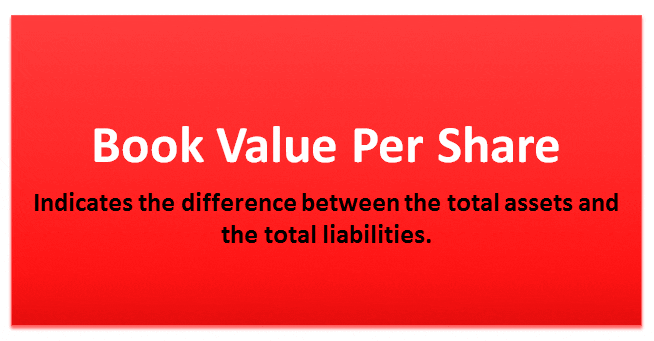
Literally, Book value per share means the value of the business according to its financial statement. It means the actual worth of the asset of a company. The actual worth asset refers (to the company’s assets – the company’s liabilities). Tangible assets such as land, equipment, building, material, etc. Liabilities consist of debt, expenses, etc.





Book Value vs Market Value
As we have mentioned above that BV and market value often get confused. So here is a brief description of market value in the stock market. BV is the actual worth of a company while market value indicates the current price. Market value is the highest estimated value of a certain property. And the market decides the value. Therefore Market value can be higher or lower than BV.
BV reflects the company’s actual worth, it is not based on the current trend. The company’s BV is closer to the company’s true or fair value. Using BV and face value one can compare the ups and downs of the market. In order to calculate it accurately, one must know the balance sheet of a company.
Features of Book Value Per Share
- BV is divided by the total number of shares, this is how book value per share is calculated.
- It is one of the most important tools for some other calculation, i.e. price to BV ratio.
- the actual BV of a stock indicates how the current market fluctuates.
- It is an intrinsic worth per share.
An Example
- Suppose company ABC’s annual assets are 150,000 and liabilities is 80,000, preferred stock is 20,000, and common shares are 2,000. Shareholders equities- (150,000-80,000)= 70,000
- Equity for common shareholders- (70,000-20,000)=50,000
- So BV / share is (50,000/2000)=25
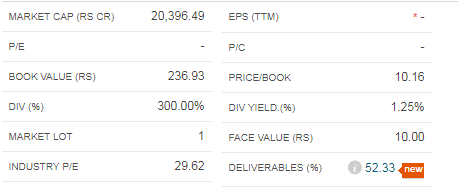
- This is GlaxoSmithKline Pharmaceuticals Ltd company’s data which shows each and every term and tool to evaluate its market scenario.
FAQs on Book Value Per Share
Book value per share (BVPS) is the total assets of a company divided by the number of its outstanding shares. A “good” BVPS depends on market conditions as well as company-specific factors. Usually, 1 to 2 times the current market price of each share is what we think is “good”.
A high BVPS can indicate sound financial health for a company in that all other things are equal. It means the company can make more profit from its investments compared to those with lower levels. Conversely, it could also mean that investors have overvalued the particular stock and future returns may not be high enough against what was expected when it traded at higher prices.
A higher BVPS indicates that there are more assets/earnings available for distribution among shareholders than was initially assumed which means potential for greater returns going forward. An increase in this metric may signal strong performance either through organic growth or via buybacks or dividends which can attract investors.
There isn’t an absolute answer to this question because ‘high’ and ‘low’ will depend on certain industry trends and sectoral norms. Companies belonging to different sectors expect different values depending upon their operations, etc. Therefore, investing based solely on BVPS alone would be risky without doing further due diligence into why such numbers exist specifically in your chosen target’s case.
Conclusion
So in order to know the market movements fundamentally, one must have knowledge about book value and market value. It is mainly a tool to get an idea about price movements in the secondary market. As BV is the accurate value, there is no space for prediction in calculated book value, but no one can predict market value.