Introduction
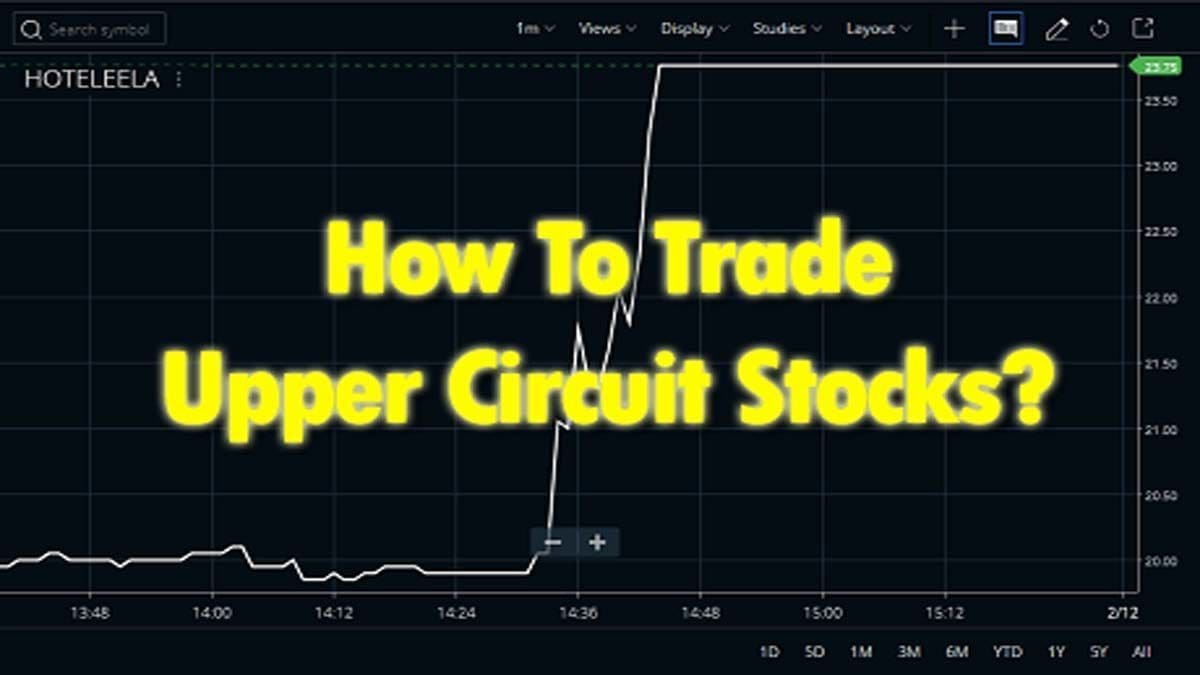
Do you want to learn how to trade “upper circuit stocks”? It may seem easy at first because these stocks tend to move up, hitting buying freezes day by day. But it’s important to note that things can change quickly, and the stock may reverse and hit the lower circuit. How can you catch the full move and exit at the right time? In this post, we will explore the strategies for trading upper-circuit stocks.
Understanding Upper Circuit Stocks
In the stock market, stocks hit upper or lower circuits because of extreme investor sentiment or manipulation by operators. When a stock hits upper circuits, investors jump in due to greed and get locked in at inflated prices. However, when investor sentiment dies down, and the stock operator comes out of the stock, the stock may halt and hit lower circuits. This can trap retail investors who have no idea of what is happening.
How to Buy Upper Circuit Shares?
Buying upper circuit shares can be risky as the stock price is at extreme levels due to excessive buying activity. Many of these stocks come from the Trade-to-Trade segment. It is important to do your research and analyze the stock’s fundamentals before making a decision. You can use a stock screener to identify potential upper circuit stocks and then conduct a thorough analysis to determine if it is a good investment.
Risks and Challenges of Trading Upper Circuit Stocks
Trading upper circuit stocks can be both profitable and risky. If you book profits too early, you may miss out on more consecutive upper circuits. Similarly, if you book too late, you may be locked into a down-freezing stock. Therefore, it’s essential to identify the optimum time to exit the stock to maximize your gains and avoid losses due to subsequent lower circuits.






Strategies for Trading Upper Circuit Stocks
Here are some strategies for trading upper circuit stocks:
Identifying Upper and Lower Circuits
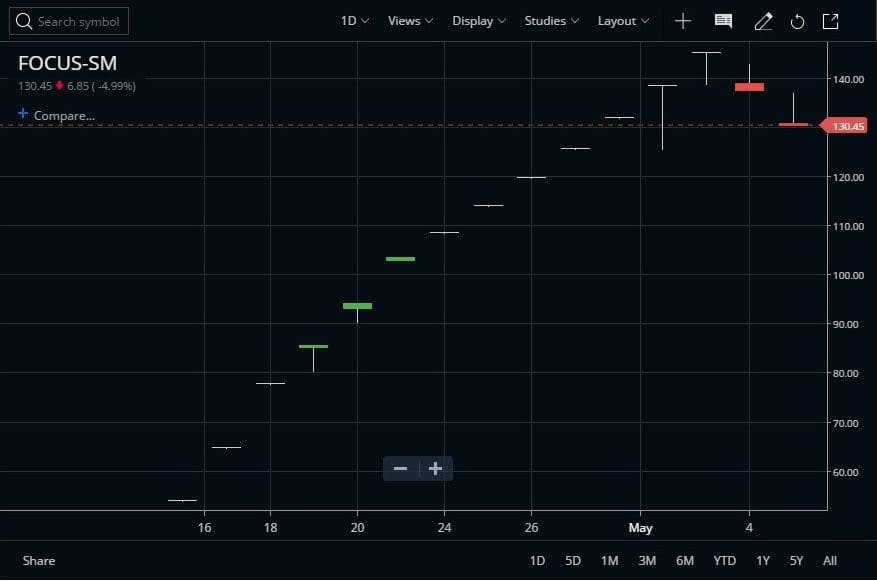
Check the daily chart to identify both upper and lower circuits in the stock market. For example, let’s consider Focus Lighting in the NSE SME exchange. This stock started hitting upper circuits since listing and is now hitting lower circuits.
Waiting for the Release of Upper Circuit
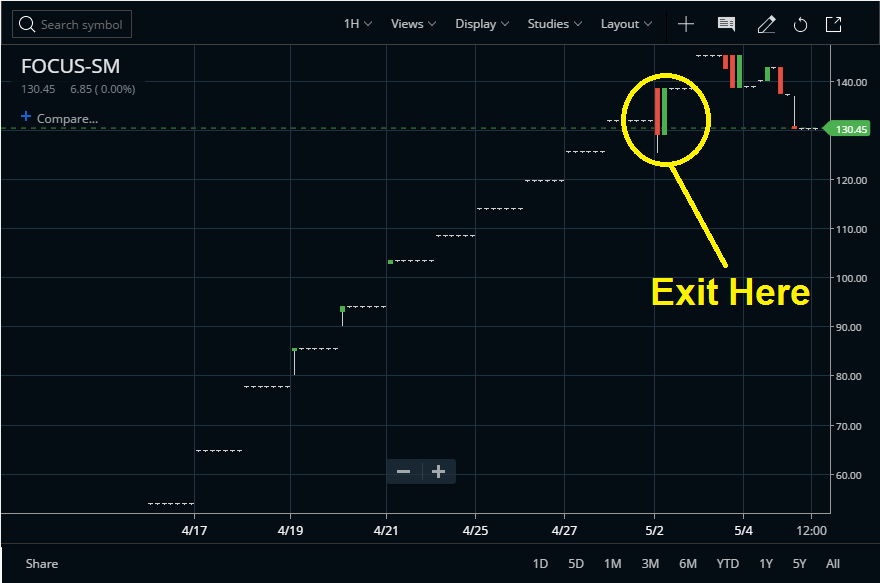
The rule of thumb is to wait for the release of the upper circuit after a series of buying freezes and sell the stock immediately.
Monitoring Daily and Hourly Charts
Check the hourly chart to identify when the upper circuit releases. For example, Focus Lighting gave us an exit opportunity on May 2, 2017, when it released the upper circuit for the first time in 12 days. You can try this strategy on more upper-circuit stocks and post your observations in the comments.
FAQ
An upper circuit in the share market is a price limit imposed by the stock exchange authorities to prevent excessive buying activity. When the stock’s price reaches the upper circuit limit, the stock exchange halts the trading for a certain period of time to stabilize the stock’s price.
The upper circuit and lower circuit are price limits imposed by the stock exchange authorities to prevent excessive buying or selling activity. When a stock’s price reaches the upper circuit limit, the stock exchange halts the trading for a certain period of time to stabilize the stock’s price. Similarly, when a stock’s price reaches the lower circuit limit, the stock exchange halts the trading to prevent further selling activity.
When a stock hits the upper circuit limit, trading is halted for a certain period of time. The stock exchange does it to prevent further buying and stabilize the stock’s price. Once the upper circuit limit is lifted, trading resumes and investors can continue buying or selling the stock.
It is possible for a stock to fall after hitting the upper circuit limit. This can happen if the stock was overbought and the market sentiment towards the stock changes. It is important to keep a close eye on the stock’s price movements and exit the position if the stock starts hitting lower circuit limits.
Yes, you can sell shares at the upper circuit limit if you have already bought the shares before the circuit hits. However, it is important to note that selling at the upper circuit limit may not always be the best decision. This is because the stock’s price may continue to rise after the stock exchange lifts the circuit limit.
Conclusion
Trading upper circuit stocks can be both profitable and risky. It’s essential to understand the market dynamics, technical analysis, and risk management before making any investment decisions. By identifying upper and lower circuits, waiting for the release of the upper circuit, and monitoring daily and hourly charts, you can maximize your gains and avoid getting trapped in lower circuits.