

Introduction
The answer is: crypto funding rate arbitrage is a market‑neutral strategy that aims to earn funding payments from perpetual futures while hedging away most price risk. If that sounds intimidating, take a breath. This guide breaks it down in plain English, with step‑by‑step actions, India‑specific notes, and real examples a newcomer can follow.
Experience and trust signals first: this guide synthesizes live trading workflows, platform practices, and common pitfalls observed across Indian and global crypto markets since the 2017–2025 cycles. It incorporates best practices from perpetual futures desks, community learnings (Reddit, Discord, X), and the author’s trading playbooks refined through testing on BTC/ETH and selective altcoins. To keep things transparent, this is educational content—no financial advice, no hidden agendas, and affiliate links (if any) should be disclosed clearly in the final published post.
The answer is: funding rates are periodic payments (often every 8 hours) exchanged between long and short traders in perpetual contracts. When the perp is above spot, longs usually pay shorts; when below, shorts pay longs. Crypto funding rate arbitrage simply positions on the “receiving” side while neutralizing price movement with a hedge. For example, if the funding is positive on BTC, a trader might short the perp (to receive) and hedge with spot or linear futures long. If negative, the trader might long the perp (to receive) and hedge short elsewhere.
Why this matters to beginners in India and globally: instead of guessing market direction, this approach focuses on carry (the funding). It’s attractive for learners who value consistency, rule‑based setups, and fewer wild swings. That said, it is not magically risk‑free. Liquidation risk, fees, slippage, funding flips, liquidity holes in altcoins, and exchange/custody risks are real. This guide shows how to reduce those risks with position sizing, proper hedging, and disciplined execution.
What this blog delivers:
- Clear definitions and examples of crypto funding rate arbitrage.
- A framework to evaluate when the strategy makes sense.
- Tools, checklists, and step‑by‑step setups suitable for beginners.
- India‑relevant notes on taxes, compliance, and platform selection.
- Balanced pros/cons and a realistic decision tree to act confidently.
By the end, the reader will understand what to do, what not to do, and how to evaluate claims like “risk free crypto trading methods” without falling for hype. The goal is simple: turn confusion into clarity, and curiosity into a repeatable process—with safety rails.
What is crypto funding rate arbitrage, in simple terms?
The answer is: funding rate arbitrage earns the periodic funding payment on perpetual futures while hedging away most price risk with an offsetting position.
Experience: consider a BTC example used widely by practitioners. If BTC perpetual funding is +0.01% every 8 hours, shorts receive and longs pay. A trader can short the perp to receive funding and buy spot BTC as a hedge. Net exposure to price becomes near‑zero; the carry (funding) remains the profit driver. For negative funding (e.g., −0.05% per window), reverse the logic: long perp to receive, short spot or a linear future to hedge.
Key ideas for beginners:
- Perpetual contracts have no expiry; funding helps keep perp price aligned with spot.
- Funding rate applies to position notional, not the margin posted.
- Leverage magnifies return on margin but slashes error tolerance. Start low.
- Hedging removes most delta risk; execution and timing do the rest.
Quick analogy:
- Think of a toll road with scheduled payouts. If the sign says, “Cars going North pay Southbound,” then position Southbound to collect—provided you also own a vehicle going North to offset travel risk. You aren’t trying to predict traffic; you’re collecting the toll.
Mini case:
- A beginner starts on BTC only. Funding for the next window is +0.01%. They short 0.1 BTC perp and buy 0.1 BTC spot. Over one 8‑hour window, the funding received may cover fees and leave a small net profit. As comfort grows, they apply tighter fee controls (maker orders) and automate alerts for funding flips.
Takeaway: focus on liquid majors (BTC/ETH), keep leverage conservative, and ensure the hedge truly offsets price swings.
Does this count as “risk free crypto trading methods”?
The answer is: no—“risk‑free” is marketing language. Funding arbitrage can be lower risk than directional trading but still carries meaningful operational and market risks.
Experience: traders who treat funding arbitrage as a yield product without controls get burned when funding flips, spreads widen, or exchanges throttle APIs near settlement. Real safety comes from process, not promises.
Main risks to understand:
- Liquidation risk: high leverage can be wiped by small moves. Beginners should avoid extreme leverage.
- Funding regime risk: rates compress or flip. That “guaranteed” carry can vanish quickly.
- Basis and slippage: marks differ across exchanges; spreads widen near settlement; partial fills hurt neutrality.
- Fees and borrow costs: maker/taker fees, interest, and borrow fees eat edge if ignored.
- Liquidity risk: altcoins with “juicy” funding often have thin books—tough to enter/exit cleanly.
- Counterparty risk: exchange solvency, downtime, chain congestion, or withdrawal queues can derail exits.
- Regulatory/tax: ensure compliance with Indian and local rules; keep records for reporting.
“Risk‑reduction” checklist (beginner‑friendly):
- Favor BTC/ETH first, then cautiously test alts.
- Keep leverage modest. Aim for a buffer so a ±2–3% move won’t liquidate positions.
- Use maker‑only orders to cut fees; avoid market orders near funding times.
- Pre‑fund both legs on two venues; don’t depend on last‑minute transfers.
- Set alerts for funding changes and maintenance margin thresholds.
- Log every funding receipt and cost; verify the edge exists net of everything.
Case in point:
- A trader chases −0.7% funding on a thin altcoin, longs the perp to receive, and shorts elsewhere. The book gaps 1% at settlement; net P&L shrinks after taker fees. Lesson: the headline rate means little if execution costs eat the edge.
Bottom line: treat “risk free crypto trading methods” as a goal of reducing risk through rules, not a guarantee. With humility and process, the strategy can be robust—but never riskless.
How do funding rates work, and why do they change?
The answer is: funding rates are periodic transfers between longs and shorts designed to keep perps in line with spot; they move with market imbalance and sentiment.




Experience: BTC/ETH funding tends to be more stable due to depth; altcoins can swing from +0.2% to −1% across windows during narratives or listing surges. Sustainable edges come from understanding when, where, and why rates move.
Funding mechanics simplified:
- If perp > spot: longs pay shorts. If perp < spot: shorts pay longs.
- Settlement cadence is often every 8 hours, but always check each exchange.
- Rate determination involves interest rate differentials, premium/discount to spot, and internal exchange models.
- Exchanges use a mark price; your eligibility depends on holding an open position over the snapshot window.
Why rates change:
- Market mood: strong bullish phases push perp above spot, making funding positive.
- Liquidity shifts: news, listings, or liquidity mining change flows and market maker inventories.
- Arbitrage pressure: as more traders do the trade, edge compresses—markets are efficient at killing easy money.
- Exchange idiosyncrasies: different reference indices, fee tiers, and leverage caps.
Beginner‑friendly example:
- During a BTC breakout, perp trades at a premium; funding turns persistently positive. A market‑neutral short‑perp/long‑spot setup can harvest that carry. When momentum fades, premiums shrink, and funding drops to flat or flips negative—time to reduce or exit.
Pro tip:
- Track a simple dashboard: funding rates by asset and exchange, mark vs. spot basis, spreads, and next settlement countdown. You don’t need fancy tech to start; a spreadsheet with API pulls and alerts works.
Takeaway: you don’t control rates—only your reaction. Harvest when the edge is strong; stand down when it’s not.
What is the safest way for a beginner to start?
The answer is: start with BTC or ETH, minimal leverage, and a clear, repeatable hedge; practice on tiny size for multiple funding cycles before scaling.
Experience: the most successful beginners adopt “slow is smooth, smooth is fast.” They iterate with BTC/ETH, master fee and fill discipline, then cautiously explore alts.
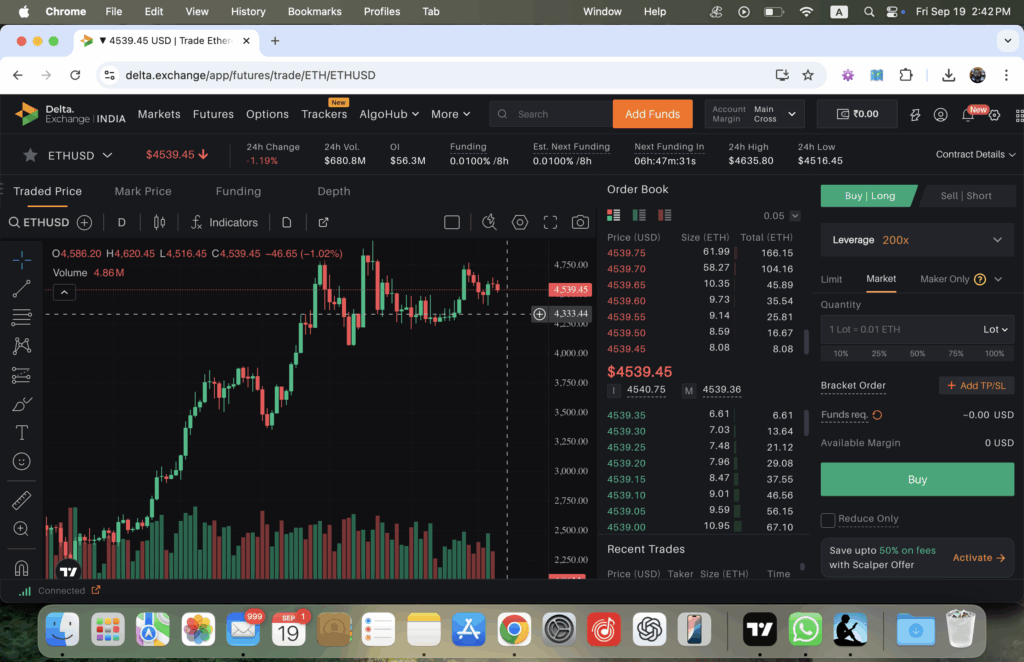
Step‑by‑step starter plan: 1) Choose your venue(s)
- Pick reputable exchanges with strong liquidity, transparent fee tiers, and simple funding displays.
- Enable two‑factor auth, whitelisted withdrawals, and sub‑accounts to isolate strategies.
2) Set your rules
- Max leverage: 5–10× on BTC/ETH to start.
- Edge floor: only trade if projected net funding ≥ 3× projected fees and slippage.
- Delta tolerance: rebalance if exposure > 1% of notional.
- Kill switch: auto‑flatten if funding flips or exchange health degrades.
3) Build your first position
- If funding is positive: short BTC perp and buy equivalent spot BTC.
- If funding is negative: long BTC perp and short equivalent spot/future.
- Use maker‑only limit orders; place them at least 15–30 minutes ahead of settlement.
4) Confirm inclusion and reconcile
- After the window, check that funding was credited.
- Log funding received, fees, slippage, and net profit.
- If net edge is thin, reduce or pause rather than chasing.
5) Iterate and scale
- Run crypto funding rate arbitrage for at least 2–3 weeks on micro size.
- Optimize: improve maker fill rates, tighten spreads, and automate alerts.
- Scale gradually; never scale faster than your logging and controls.
A small India‑focused example:
- A user posts ₹25,000 as margin on BTC perp at 5× leverage and hedges with spot. With a modest positive funding, they target small daily carry, ensuring all trades are maker‑fee tier. After two weeks and stable execution, they step up to ₹75,000 margin, still within pre‑defined drawdown limits.
Avoid:
- Jumping straight to high‑leverage altcoin plays.
- Market orders near settlement times.
- Ignoring borrow fees when shorting spot on the hedge leg.
Which is better for beginners: single‑venue hedge or cross‑exchange arbitrage?
The answer is: single‑venue hedge is simpler; cross‑exchange can add edge but increases operational risk.
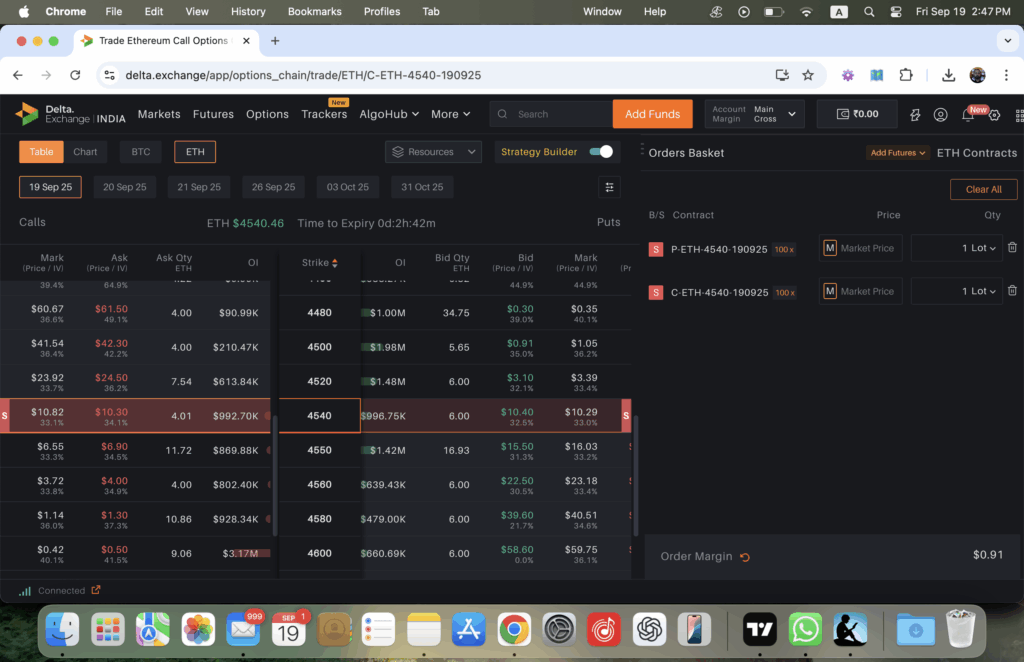
Experience: most beginners achieve consistency faster by keeping both legs on one venue (e.g., perp versus spot or linear futures) due to simpler funding eligibility checks and lower coordination risk. Cross‑exchange makes sense once you can measure and manage basis and latency.
Comparison table (at a glance)
- Simplicity
- Single‑venue: higher
- Cross‑exchange: lower
- Potential edge
- Single‑venue: moderate and consistent
- Cross‑exchange: potentially higher due to rate differentials
- Operational load
- Single‑venue: lower (one KYC, one API)
- Cross‑exchange: higher (two KYC, transfers, API coordination)
- Failure modes
- Single‑venue: exchange downtime risks both legs
- Cross‑exchange: desync risk; one venue down, other live
- Best use case
- Single‑venue: BTC/ETH learning phase
- Cross‑exchange: advanced users seeking extra basis/funding spread
Case:
- A beginner runs BTC short‑perp/long‑spot on the same exchange for two weeks successfully. Then they notice Exchange A’s BTC funding is consistently higher than Exchange B’s. They test a cross‑exchange pair at tiny size, monitor basis drift, and confirm that net edge remains after doubled slippage assumptions. Only then do they scale.
Tip:
- If going cross‑exchange, pre‑fund both sides and keep a standby cushion on each venue. Don’t rely on last‑minute deposits near the window.
How do fees, slippage, and leverage change profitability?
The answer is: small costs compound; leverage amplifies both yield and liquidation risk; maker‑only discipline is a major determinant of net profitability.
Experience: many “great” edges fail net of fees. The traders who win long‑term relentlessly reduce taker trades, avoid last‑second market orders, and size within liquidity to minimize impact.
Practical cost model:
- Funding receipts: rate × notional.
- Trading costs: maker/taker fees × traded notional; borrow fees if shorting spot; option premiums if hedging with options.
- Slippage: assume a basis‑point budget for each leg and multiply by size.
- Net edge per window: funding receipts − all costs. Require a healthy buffer (e.g., ≥ 2–3× total cost) before entering.
Leverage trade‑offs:
- Higher leverage increases return on margin but narrows buffer to liquidation.
- Beginners should prioritize survival: lower leverage and clean hedges beat flashy returns.
India‑specific actionables:
- Choose fee tiers wisely (volume tiers can cut costs).
- Convert INR to stablecoins strategically to reduce conversion costs.
- Keep meticulous records for taxation and reporting.
Mini story:
- A trader improved net P&L by switching from taker to maker flow on both legs, plus placing orders 20–30 minutes before settlement to avoid last‑second scrambles. Net monthly returns improved even though gross funding was unchanged—cost control was the edge.
What are practical playbooks and checklists I can follow?
The answer is: for crypto funding rate arbitrage use a simple set of playbooks—starter, altcoin cautious, and “stand down”—with checklists before, during, and after funding windows.
Starter playbook (BTC/ETH, single venue)
- Before window
- Funding ≥ threshold (e.g., +0.005% or −0.005%).
- Depth sufficient for planned size; spreads tight.
- Maker‑only orders staged; alerts set for T−30, T−10, T−1 minutes.
- Margin buffer > 3–5× maintenance margin.
- During window
- Confirm orders resting; avoid chasing fills unless within spread budget.
- Monitor mark vs. spot; watch for spikes.
- After window
- Verify funding credited; reconcile against projection.
- Log fees, slippage, and net P&L. Update edge score.
Altcoin cautious playbook
- Require higher gross funding (to cover higher slippage).
- Half the size used on BTC/ETH; widen stop conditions.
- Always test for at least 3–5 cycles on micro size.
Stand‑down rules
- Funding compresses below your floor or flips erratically.
- Spread/impact exceeds budget.
- Exchange/API instability appears; status pages flag incidents.
- Borrow costs jump or inventory unavailable on the hedge.
Micro case:
- A user sees −0.15% funding on an altcoin. They plan ₹50,000 margin each side but reduce to ₹20,000 after checking thin depth. Maker orders partially fill; net funding arrives but slippage was higher than expected. They log and revise the required edge higher for that pair.
Bonus: using protective options
- If shorting perp to receive positive funding, a small long call can cap upside blowouts. Budget 20–30% of expected weekly funding for protection in volatile weeks. This is optional and more advanced; keep it simple until comfortable.
Conclusion
The answer is: crypto funding rate arbitrage is a structured, largely market‑neutral way to earn periodic funding receipts, but it is not inherently risk‑free. Success hinges on sober expectations, careful hedging, fee discipline, and the humility to stand down when the edge is weak.
What to remember:
- Start with BTC/ETH and minimal leverage. Complexity and size come later.
- Funding is a moving target; let your rules—not emotions—decide whether to trade.
- Maker‑only orders and early staging boost net profitability more than most beginners realize.
- Track everything. If the edge doesn’t show up after costs, iterate or pause.
- “Risk free crypto trading methods” is a misnomer. The method reduces risk by design, but management makes it durable.
A simple next step:
- Build a small dashboard: upcoming funding windows for BTC/ETH on two exchanges, current rates, spreads, and fee tiers. Define your entry thresholds and kill switches. Run micro size for two weeks and record every detail. Review results honestly. If it works net of costs and stress scenarios, scale gradually. If not, refine or step back.
If this resonated, save the checklist, share with a friend learning crypto, and revisit before each window. Clarity compounds—just like good process and disciplined execution.