

If you’re searching for best defence stocks budget 2026, you’re not alone—and you’re not late. I’ve been trading and investing in Indian markets since 2002, and through StockManiacs.net (since 2008), I’ve watched one pattern repeat: when a big policy event approaches, the internet becomes a noisy bazaar of “sure-shot” tips. Most traders lose money not because they lack intelligence, but because they lack a process.
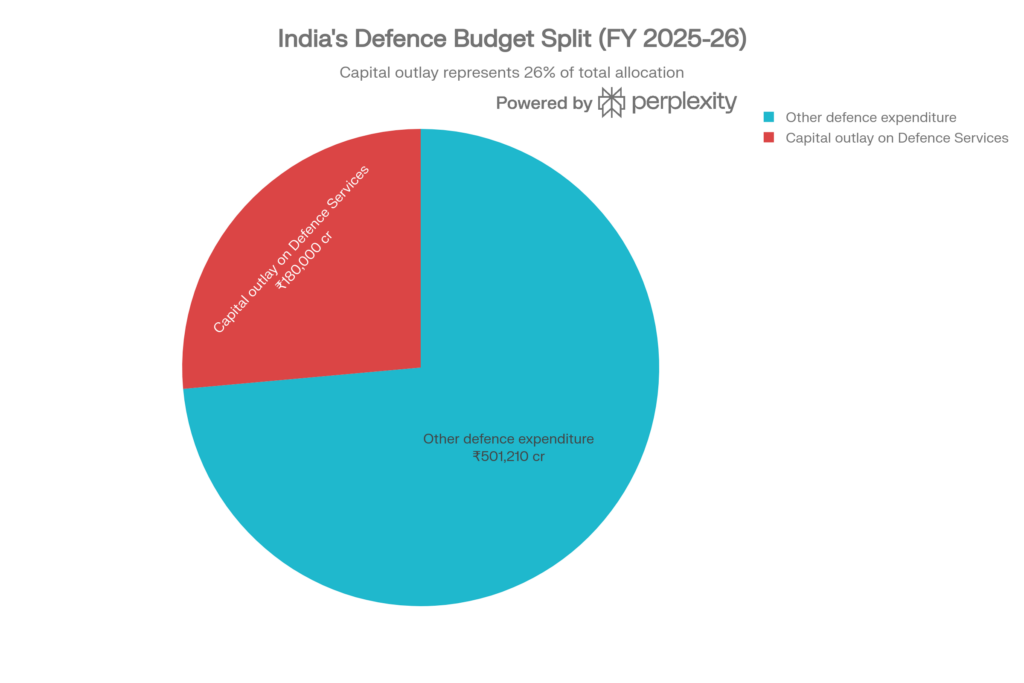
The answer is simple: the best defence stocks around Budget 2026 are the ones with (1) visible order pipelines, (2) proven execution, and (3) reasonable risk management on your side—not the ones trending on social media for a day. India’s FY 2025–26 defence allocation was ₹6,81,210.27 crore, and the capital outlay for Defence Services was ₹1,80,000 crore—these numbers matter because capex drives fresh orders and revenue visibility for defence manufacturers and integrators. For the official government note, read the PIB release here: https://www.pib.gov.in/PressReleasePage.aspx?PRID=2098485
But here’s the mentor truth: a “budget theme” can give you momentum, yet it can also trap you into buying after a euphoric spike. A Business Today TV segment around the defence rally warned that pre-budget rallies in themes like defence often cool off post-budget and advised stock-specific thinking and valuation discipline. I want you to read that again: stock-specific.
In this guide, I’ll walk you through how I evaluate the best defence stocks budget 2026 setup using a trader’s lens (price, risk, timing) and an investor’s lens (orders, execution, durability). I’ll also give you a step-by-step filtering method you can replicate in TradingView, AmiBroker, or a simple Python screener—because a repeatable system beats excitement every single time. Along the way, you’ll see India-specific budget facts, verified performance indicators (like BEL’s recent quarterly numbers and order-inflow guidance), and realistic “what can go wrong” scenarios that protect your capital first.
Should you buy defence stocks before Budget 2026?
I’ve traded through enough “event cycles” to say this confidently: the answer is yes—but only with a plan. Budget-week trades are not like normal trades, because the price often moves on expectations first, and facts later. A public market expert on Business Today described the defence rally as a familiar “ahead of budget” pattern that has often fizzled out after the budget, and he stressed valuation checks and selective profit-booking after sharp run-ups.
What exactly is the “Budget 2026 defence trigger”?
The answer is: it’s not one headline—it’s the capex line and the execution pace behind it. India’s FY 2025–26 MoD allocation was ₹6,81,210.27 crore (+9.53% over FY 2024–25 BE) and it was 13.45% of the Union Budget. Out of this, ₹1,80,000 crore was allocated to capital outlay on Defence Services (26.43% of total allocation). When capex rises or when utilisation improves, procurement momentum improves—and defence companies that sit in the procurement chain get repriced.
A Jefferies note reported that India’s defence capex is expected to rise over 10% in FY27 after double-digit growth in FY26, and it tracked a strong pickup in April–November 2025 defence capital spend versus earlier years’ utilisation ranges. That’s why “best defence stocks budget 2026” has real search demand—because traders are trying to front-run this capex story.
A real-world story I’ve seen (and you may relate)
In my mentoring work, I often meet a trader like “Rohit” (name changed). He buys a theme stock two days before the event because Telegram says “budget mein rocket.” He doesn’t set a stop. On Budget day, the stock spikes, he feels like a genius, then it fades for two weeks—and he refuses to exit because he’s emotionally invested. The damage is not the loss; it’s the habit.
Your edge is not predicting the Budget. Your edge is planning for two outcomes:
- Budget exceeds expectations: price may gap up, then pull back.
- Budget disappoints: price may gap down, then consolidate.
If you can survive both outcomes with controlled risk, you deserve to play the event.
How do you shortlist the best defence stocks for Budget 2026?
The answer is: use a three-layer filter—fundamentals (orders + execution), event sensitivity (budget linkage), and price behaviour (risk-defined entries). I’ve built trading systems since 2008, and whether I’m using MetaStock, AmiBroker, TradingView, or Python, the logic remains the same: filter first, then time. (A good screener finds candidates; a good plan makes money.)
Layer 1: Orders and execution (the “reality check”)
Start with companies that can convert policy into profits. Here’s a practical checklist you can use:
- Order inflow visibility: management guidance or credible coverage that order inflows are tracking strongly.
- Margin discipline: consistent operating margins, not “one quarter magic.”
- Delivery credibility: history of timely execution (very important in defence).
- Working-capital sanity: defence contracts can be milestone-based; weak cash discipline hurts investors during slow phases.
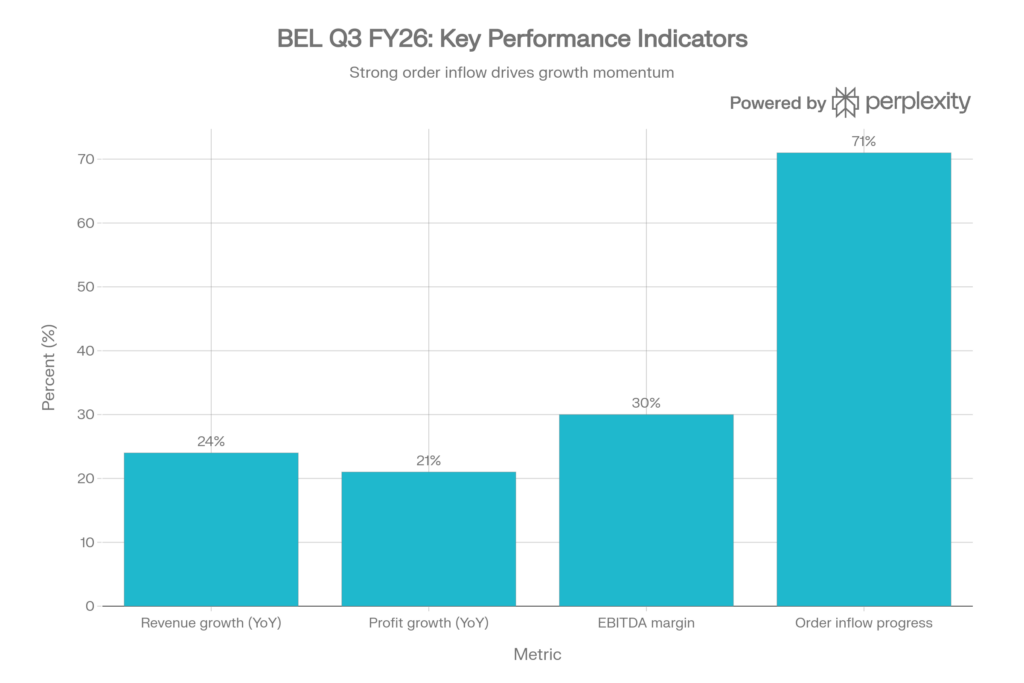
Mini case study (BEL): CNBC-TV18 reported that BEL’s Q3 profit rose about 21% YoY and EBITDA margins were around 30% (above its 27% guidance), and it also reported that BEL had already achieved 71% of its FY26 order inflow guidance of ₹27,000 crore (with ₹19,300 crore announced in FY26 so far). That’s a real performance indicator, not a “tip.”
Layer 2: Event sensitivity (the “Budget linkage”)
Not every defence company reacts equally to Budget headlines. The answer is: companies linked to fresh procurement and capex-heavy programs tend to respond more. A Jefferies report explicitly framed defence capex allocation in Budget 2026–27 as a key monitorable and named HAL, BEL, and Data Patterns as potential beneficiaries of increased spending.
So ask:
- Is the company exposed to capex-heavy procurement (aircraft, radars, missiles, shipbuilding)?
- Does it benefit from the indigenisation and domestic procurement emphasis mentioned in official communication?
- Does it have near-term order catalysts that the market can price quickly?

Layer 3: Price behaviour (the “trader’s entry gate”)
This is where most beginners go wrong. They do research, then buy anywhere.
My rule: never buy an event theme without defining invalidation.
On TradingView, I look for:






- Clean base + breakout with volume (not a vertical candle).
- A level where my thesis is wrong (stop-loss).
- Position size that respects the stop (risk per trade).
In AmiBroker, you can code a simple scan: “Close above 20-day high AND volume above 20-day average,” then manually check charts. In Python, you can do the same with NSE bhavcopy data. The tool is not the magic; the discipline is.
Which defence stocks are most budget-sensitive in 2026?
I’ll answer this like a mentor: the answer is not one stock—it’s a basket of sub-themes. When people Google best defence stocks budget 2026, they often want a “Top 5 list.” Lists are easy; frameworks are profitable.
Here’s how I categorise the space so you don’t mix different risk profiles:
| Sub-theme | What the Budget changes | What you should track |
|---|---|---|
| Defence electronics & systems | Faster procurement cycles, bigger integration orders | Order inflows, margins, execution updates |
| Aerospace platforms | Large multi-year programs, capex-heavy orders | Capex allocation trends, delivery visibility |
| Capex utilisation trend | “Allocated vs spent” drives confidence | Utilisation/pace, not just allocation |
Case study: BEL as a “budget + execution” candidate
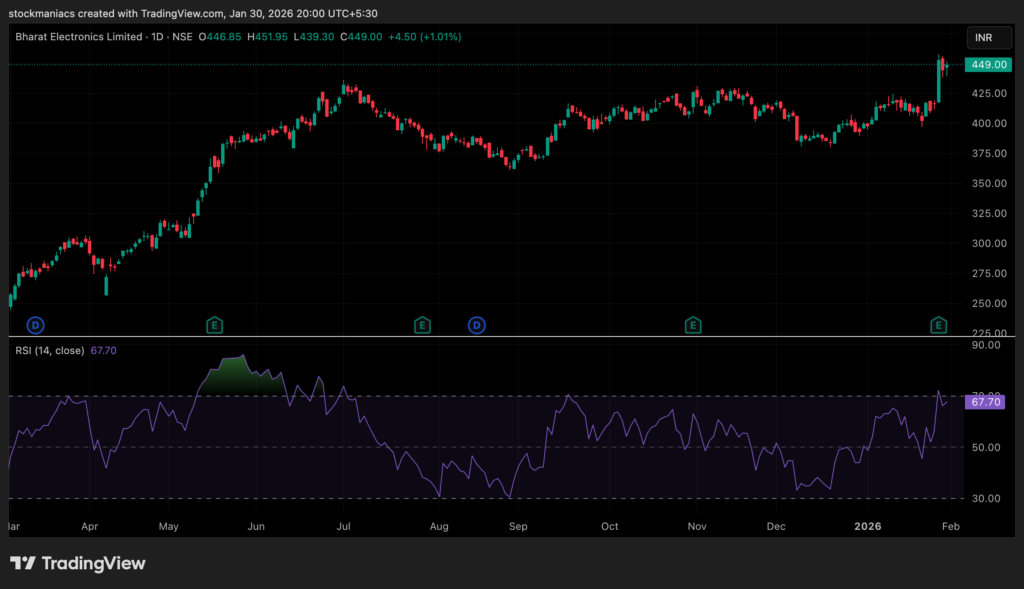
The answer is: BEL becomes budget-sensitive because it combines event optionality with recent execution proof. CNBC-TV18 reported multiple broker targets and highlighted that BEL’s margins and order inflow progress were ahead of guidance, while management reaffirmed at least 15% revenue growth guidance for FY26. Even if you ignore targets (I treat targets as opinions), the operating numbers and guidance are concrete performance indicators.
Case study: Defence capex is the real “sector tailwind”
Many traders obsess over the total budget number. The answer is: capex matters more for the sector’s revenue cycle. The official PIB release states ₹1,80,000 crore was allocated to capital outlay on Defence Services in FY 2025–26, and it notes that capital outlay was increased versus the previous year’s budget estimate. Jefferies then adds an investor-grade lens: it expects defence capex to rise over 10% in FY27 and highlights faster utilisation in April–November 2025 compared to earlier years.
This “allocation + utilisation” combination is why defence stocks can trend beyond a one-day event.
A practical story: “List buyers” vs “process traders”
I’ll give you a common scenario from my onboarding sessions: two traders buy the same defence stock. Trader A buys because a YouTube thumbnail said “Budget se double.” Trader B buys because price broke a base, risk is defined, and the business has an order pipeline. When the post-budget volatility hits, Trader A freezes. Trader B executes. Same stock, different outcome.
That’s why, in my world, the best defence stocks budget 2026 are the ones you can trade without panic.
How should a beginner trade defence stocks without falling for “sure-shot tips”?
The answer is: trade the setup, not the story—and protect your downside like a professional. I don’t care if you’re using Zerodha Kite, Upstox, Fyers, or any other platform; the risk rules don’t change.
Step-by-step: A simple “Budget event” trading plan
- Pick 3–5 candidates, not 20.
Too many stocks equals no focus. Use the filter method above. - Define your timeframe first.
- Swing trade: 5–20 trading days (event + continuation).
- Position trade: 3–12 months (budget + execution cycle).
- Mark three levels on the chart (TradingView works great).
- Support: where buyers defended earlier.
- Resistance: where sellers blocked earlier.
- Invalidation: where your thesis fails.
- Choose one entry type.
- Breakout entry: above resistance with volume confirmation.
- Pullback entry: after breakout, on retest.
- Risk rule (non-negotiable):
Risk a fixed % of capital per trade. If you’re new, keep it small. The goal is survival, not heroism.
Mini example (hypothetical but realistic)
You shortlist BEL because numbers show execution strength (margins, order inflows, guidance) and because it’s in the conversation for budget-linked capex benefits. Now you wait. If price breaks out and holds, you take a small position with a stop below the base. If price gaps up on Budget day and becomes vertical, you skip or you wait for a pullback. Missing one trade is cheaper than buying the top.
The “post-budget fade” trap you must respect
A Business Today TV discussion around the defence rally included a clear caution: these theme rallies often cool off after the budget, and investors should evaluate valuations and consider selective profit-booking after sharp run-ups. This doesn’t mean defence is “bad.” It means entry matters.
In my experience, beginners lose money by:
- Averaging losers without a stop.
- Buying after a big green candle because of FOMO.
- Confusing a 2-day rally with a long-term thesis.
Your defence strategy must be boring. Boring makes money.
What market data should you track during Budget 2026 week?
The answer is: track capex direction, spending pace, and company-specific order signals, not just headlines. This is where experienced traders quietly win while others argue on social media.
The three data points I would watch first
- Defence capex direction (YoY change).
Jefferies expects India’s defence capex to rise over 10% in FY27, and it frames Budget 2026–27 capex allocation as a key monitorable for defence stocks. - Capex utilisation behaviour.
Jefferies highlighted that April–November 2025 defence capex spend was up strongly YoY, and it referenced higher utilisation by Nov 2025 compared to earlier years. This matters because the market rewards “spend momentum,” not just “promise.” - Overall government capex pressure.
Economic Times reported Jefferies expects overall government capex growth around 12% in FY27 (to ₹12.5 trillion) and suggested defence capex could take priority and grow much faster (even citing a 25% figure as a possibility). This gives context: if fiscal space is tight, expectations can get priced aggressively and then reality-check comes fast.

How to turn this into a “live checklist” (so you don’t panic)
Create a simple one-page note:
- Budget day: write expected capex range (from credible sources) and actual announced number.
- Next 3 sessions: watch whether the price holds above breakout levels or fails back into the base.
- Next 30 days: track order announcements and quarterly commentary.
If you’re a systems person like me, you can even automate alerts:
- TradingView alerts on breakout levels.
- Python script to flag unusual volume.
- A watchlist that tracks weekly closing strength (weekly close > prior week high).
A mentoring-room story
Every Budget, I see two types of messages:
- “Sir, defence stocks upar jaayega kya?” (Will it go up?)
- “Sir, my stock is down 6%, should I average?” (Should I average?)
The first question is noise. The second is dangerous.
The best question is: “What would make my plan invalid?” If you ask that, you’re already ahead of 80% of retail traders.
What are the risks in best defence stocks budget 2026 trades?
The answer is: the biggest risk is not the Budget—it’s your entry and your expectations. Defence is a powerful long-term theme, but the market can punish you in the short run if you buy euphoria.
Risk 1: Valuation overheating and “priced-in” expectations
When everyone is bullish, the market has already moved. A Business Today TV expert explicitly warned about valuation caution and selective profit booking after sharp run-ups in budget themes. That’s not fear-mongering; that’s market memory.
Real example: In BEL’s case, CNBC-TV18 reported strong quarter performance and broker upgrades, which can attract momentum traders fast. Momentum is not bad—but it needs risk control.
Risk 2: Budget disappointment vs market imagination
Jefferies expects defence capex to rise over 10% in FY27, but expectations can drift higher in social media circles. If the actual number is “good but not amazing,” stocks can fall even if the sector is fundamentally strong. That’s why I prefer stock-specific setups over blind sector bets.
Risk 3: Execution delays (the silent killer)
Defence businesses can have:
- Long project cycles.
- Milestone-based revenues.
- Delays from approvals, supply chains, or testing.
So your investment thesis must include patience. Your trading thesis must include a stop.
Risk 4: Liquidity traps for retail traders
Some defence names (especially smaller ones) can move fast and hit circuits. Beginners get attracted to speed, then stuck. The protection is simple:
- Avoid oversized positions.
- Prefer liquid names if you’re trading (tight stops require liquidity).
- Don’t confuse a “fast mover” with a “high-quality business.”
A realistic “bad outcome” story (so you stay safe)
A trader in our extended community once bought a stock after a 12% single-day move because “budget mein aur upar jayega.” Next day it opened flat and fell. He averaged. The week ended red, and he stopped trading for a month.
If your strategy for best defence stocks budget 2026 is “I’ll buy and hope,” you’re gambling. If your strategy is “I’ll buy only if price confirms and risk is defined,” you’re trading.
Conclusion: Your next step for Budget 2026
If you came here searching for best defence stocks budget 2026, the answer is not a secret list—it’s a disciplined process. India’s FY 2025–26 defence allocation (₹6,81,210.27 crore) and capital outlay for Defence Services (₹1,80,000 crore) show the structural direction: modernisation and capex are real, and policy intent is clearly documented.
At the same time, you must respect how markets behave around events. A Business Today TV segment captured a hard truth: pre-budget rallies in themes like defence can cool off post-budget, so you should stay stock-specific, evaluate valuations, and consider profit-booking after sharp run-ups. That’s not a reason to avoid the sector; it’s a reason to avoid emotional entries.
Here’s what I want you to do today—practical and protective:
- Pick 3–5 defence candidates only after checking order visibility and execution indicators (BEL’s recent quarter is a good example of what “execution proof” looks like).
- Mark levels on the chart and decide your stop before you buy.
- Decide if you’re trading the Budget week or investing for the multi-year capex cycle—don’t mix the two.
- Keep position size small enough that you can sleep.
One transparency note: over the years, my independent business has partnered with brokers like Zerodha, Upstox, and Fyers to onboard and mentor traders, but this article is written as education—not as a “broker pitch” and not as a promise of returns. Your capital deserves clarity, not hype.
If you want, reply with your current timeframe (swing trade or investing) and the list of defence stocks you’re tracking—I’ll help you turn that into a clean, risk-defined plan.