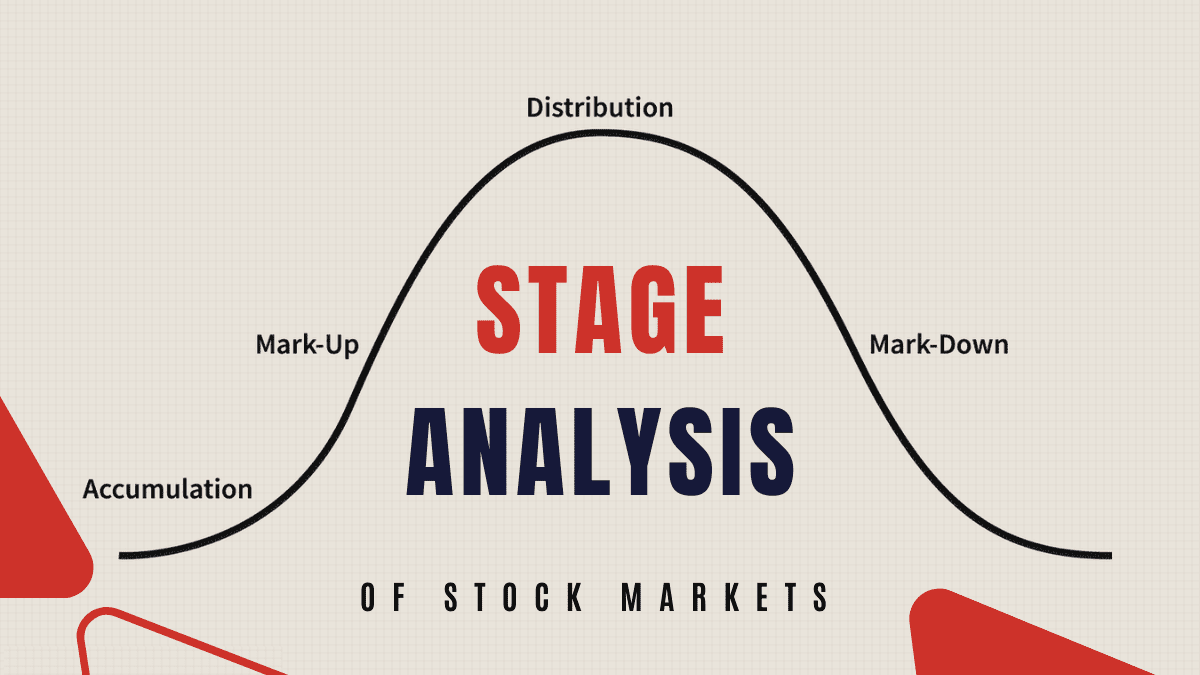

What if the market’s biggest inefficiency happened every single earnings season — and most retail investors completely missed it? Post earnings announcement drift, or PEAD, is one of the most rigorously documented anomalies in financial history, first identified in 1968 and still generating double-digit returns for those who know how to use it. With India’s Q1 FY27 earnings season kicking off on July 9, 2026 — and ICICI Securities slashing IT sector targets by up to 33% — the stage is just perfect for a classic PEAD setup. In this article, you will learn exactly what post-earnings announcement drift is, how to measure it using the SUE metric, how to apply it to Indian stocks on the NSE, and what risks to watch for this earnings season.
What Is Post Earnings Announcement Drift in the Stock Market?
Post earnings announcement drift is a well-documented stock market anomaly where share prices continue moving in the direction of an earnings surprise for weeks — and sometimes months — after the announcement date. In other words, if a company beats earnings expectations significantly, its stock does not instantly price in all that good news. Instead, the price drifts higher gradually over the next 30 to 60 trading days. The reverse is equally true: a company that badly misses estimates tends to keep falling even after the initial sell-off.
The anomaly was first formally identified by Ball and Brown in 1968 and has been replicated across markets, time periods, and asset classes ever since. The persistence of post-earnings announcement drift is remarkable — it has survived decades of academic scrutiny, algorithmic trading, and market evolution. Research published in recent years continues to confirm that PEAD generates risk-adjusted annual returns of between 8.76% and 43% depending on the methodology used.
Why does it persist? The core reason is that markets underreact to earnings news. Individual investors are slow to update their views. Institutional investors — particularly large funds with constraints on position sizing — cannot always buy as aggressively as the earnings surprise warrants. As a result, information gets absorbed gradually rather than instantly, and prices drift in the direction of the surprise over the following weeks.
Post Earnings Announcement Drift and the SUE Metric Explained
To trade post earnings announcement drift systematically, you need a way to measure the size of an earnings surprise in a standardised, comparable way. That is where the Standardised Unexpected Earnings metric — known as SUE — comes in.
SUE is calculated by dividing the earnings surprise (actual earnings minus expected earnings) by the standard deviation of recent earnings surprises for the same stock. The formula normalises the surprise across stocks of different sizes, sectors, and volatility profiles. A company with an SUE score in the top 20% of all reporting stocks has delivered the most positive relative surprise — and is therefore the strongest PEAD long candidate. A stock in the bottom 20% by SUE is the strongest short candidate.
Academic research using the SUE framework shows that a portfolio holding the top SUE quintile for 60 trading days generates approximately 12% annual abnormal returns. Combining SUE with the Earnings Announcement Return — how much the stock actually moved on results day — further sharpens the signal. When a stock has both a high SUE score and a strong positive price move on results day, the evidence for post-earnings announcement drift is strongest. For a detailed breakdown of how to measure earnings surprises and why they matter, Investopedia’s guide to earnings surprises is an excellent starting point.
How Post Earnings Announcement Drift Works in Indian Stocks
PEAD is not just a US or global phenomenon — research specifically examining the Indian stock market has found statistically significant evidence of the anomaly in NSE-listed stocks. A study published in the Scientific Research journal covering NSE data from 2002 to 2017 confirmed that post earnings announcement drift exists in India and can be exploited, making it a legitimate edge for Indian retail investors and traders.




The Indian market context adds a few unique features that can amplify PEAD effects. First, institutional investor penetration among Indian retail investors is still growing — a large share of the retail market is driven by emotion and momentum rather than disciplined earnings models. This means the underreaction to earnings surprises tends to be more pronounced in Indian mid-cap and small-cap stocks, where analyst coverage is thinner. Second, the quarterly results season in India is highly concentrated — most NSE-listed companies report within a 4–6 week window — which creates multiple simultaneous PEAD opportunities for disciplined traders.
Third, FII and DII flows in India often lag earnings data. Foreign institutional investors, in particular, sometimes take several weeks to adjust their sector weightings after a strong or weak earnings quarter. This lag creates the drift window that PEAD traders aim to exploit. According to Business Standard Markets, FII positioning shifts around Indian earnings seasons are a reliable secondary indicator for PEAD direction.
According to Economic Times Markets, demand commentary from management teams is the primary driver of post-results stock direction — making it the most important input for any PEAD analysis in Indian IT stocks.
PEAD Setup for Q1 FY27: Why This Earnings Season Is Ideal
The Q1 FY27 results season — starting with TCS on July 9, 2026 — arrives with expectations already dramatically lowered. ICICI Securities downgraded the entire IT sector from Neutral to Negative on July 2, cutting TCS’s target price by 33% to ₹1,860 and Infosys’s target by 27% to ₹950. When the bar is set this low, the probability of a positive surprise — and therefore a strong positive PEAD setup — increases significantly.
Here is why the current setup is a textbook PEAD opportunity:
- Depressed expectations create surprise upside. Analyst consensus is bearish heading into Q1 FY27. Any result that merely avoids being as bad as feared could register as a meaningful positive surprise — triggering the drift.
- Heavy pre-results selling has created oversold conditions. Nifty IT fell over 2% on July 1 alone, and has significantly underperformed the broader market in recent weeks. Oversold stocks that then deliver a surprise positive result are among the strongest PEAD candidates.
- The earnings window runs July 9 to July 23 — from TCS to Infosys — giving traders a concentrated, sequential opportunity to enter PEAD positions across large-cap and mid-cap IT names.
- Mid-cap IT stocks are the highest-leverage PEAD plays. Names like Coforge, Persistent Systems, Mphasis, and LTIMindtree receive far less analyst attention than TCS or Infosys, meaning their earnings surprises (positive or negative) tend to trigger stronger and longer-lasting drift.
The key metric to watch: if TCS’s actual Q1 revenue growth comes in at 1.5% QoQ constant currency versus the ICICI Securities estimate of 0.3%, that is a significant positive SUE — and the drift trade is live from the close on July 9.
How to Trade Post Earnings Announcement Drift in India — Step by Step
Translating post-earnings announcement drift theory into a practical trading framework requires discipline and a clear process. Here is a step-by-step playbook for Indian retail investors trading on NSE:
- Step 1 — Track the results calendar. Know the exact date and time of every company’s result announcement. For Q1 FY27: TCS (July 9), HCL Tech (July 13), L&T Technology Services (July 14), Infosys (July 23). Set calendar alerts and be ready to act within 24 hours of the announcement.
- Step 2 — Calculate the SUE score. Before results, note the consensus analyst estimate from sources like Screener.in or Trendlyne. After results, calculate: (Actual EPS − Estimated EPS) ÷ Standard deviation of past 4–8 quarters of surprises. Rank the stock against others reporting in the same week.
- Step 3 — Confirm with the Earnings Announcement Return. How did the stock move on results day? A high SUE score combined with a positive results-day move of 3% or more is the strongest PEAD signal. If the stock barely reacted despite a strong beat, the drift may be limited.
- Step 4 — Enter the position one to two days after the announcement. Do not buy on results day itself — the initial gap move is often volatile and mean-reverting. The classic PEAD entry is Day 2 after the announcement, when the first euphoria has faded but the drift is just beginning.
- Step 5 — Hold for 20 to 60 trading days. PEAD drift is not a one-week trade. Research consistently shows the drift extends over 60 trading days (approximately 3 months). Short-term traders can exit after 20 days; longer-horizon investors hold the full window.
- Step 6 — Set a stop-loss at 7–8% below entry. PEAD is a probability-based strategy — not every surprise triggers a clean drift. Protect capital with a disciplined stop-loss, particularly if the broader market reverses sharply after entry.
Risks and Limitations of Post Earnings Announcement Drift
Like any trading strategy, post earnings announcement drift carries real risks that every investor must understand before deploying capital.
The first risk is drift decay. Research from Columbia Business School and others shows that PEAD has weakened over time, particularly in large-cap stocks where algorithmic trading and faster institutional response have compressed the drift window. In Indian large-caps like TCS and Infosys, the drift may unfold over a shorter window than the classic 60-day model suggests. Mid-cap and small-cap Indian stocks, with less algorithmic coverage, continue to exhibit stronger and more persistent drift.
The second risk is macro override. PEAD assumes the broader market remains relatively stable during the drift window. However, if a major macro event — a sudden RBI rate decision, a geopolitical escalation, a sharp rupee move — hits the market during the holding period, it can overwhelm the earnings-driven drift entirely. The current environment, with the Iran war ceasefire still fragile and crude oil volatile, makes this risk particularly relevant.
The third risk is false positives. Not every beat triggers a drift. Sometimes a stock beats estimates but falls because guidance disappoints or because the beat was driven by one-time factors rather than sustainable business improvement. Always cross-check the quality of the earnings surprise — was it driven by core revenue growth and margin expansion, or by exceptional items and tax credits?
Frequently Asked Questions on Post Earnings Announcement Drift
Post earnings announcement drift is the tendency of a stock to keep rising after a positive earnings surprise — or keep falling after a negative one — for 30 to 60 days after the results. The market underreacts initially, and prices gradually catch up to reflect the full impact of the earnings news.
Yes. Academic research covering NSE-listed stocks from 2002 to 2017 confirmed statistically significant PEAD effects in the Indian market. The effect is strongest in mid-cap and small-cap stocks with lower analyst coverage, where institutional underreaction is more pronounced and the drift window is longer.
Most academic research documents the drift lasting 60 trading days (approximately 3 calendar months) after the results announcement. In practice, the strongest price movement often occurs in the first 20–30 trading days. Indian large-cap stocks may show a compressed window of 15–25 days due to faster institutional response.
Mid-cap IT stocks — Coforge, Persistent Systems, Mphasis, LTIMindtree — are the highest-potential PEAD candidates for Q1 FY27. These stocks have lower analyst coverage than TCS or Infosys, meaning earnings surprises (positive or negative) tend to produce stronger and longer drift. Large-cap IT stocks are also worth watching given deeply depressed expectations ahead of results.
Conclusion: Use Post Earnings Announcement Drift as Your Q1 FY27 Edge
With India’s Q1 FY27 earnings season beginning on July 9 and analyst expectations cut to multi-year lows, the conditions for a textbook post earnings announcement drift setup are firmly in place. The strategy is simple in concept but requires discipline in execution — calculate the SUE score, confirm with the results-day price reaction, enter on Day 2, and hold for 20 to 60 trading days with a defined stop-loss. PEAD will not work on every stock every quarter, but as a systematic edge applied consistently over the earnings season, it remains one of the most durable anomalies available to Indian retail traders. The market’s inefficiency is your opportunity — and results season is when that opportunity arrives on a schedule.
Stay tuned to StockManiacs for live coverage of Q1 FY27 results, earnings surprise tracking, and PEAD setups as each company reports.