
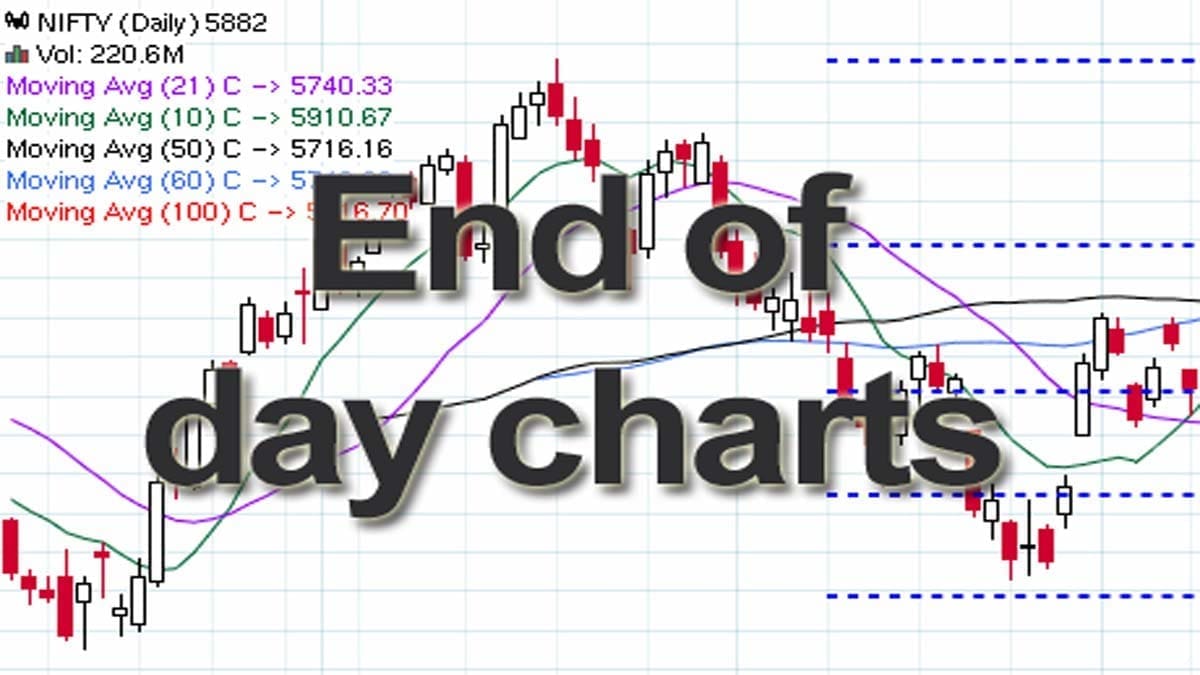
Here you can get the end-of-day charts (EOD charts) of stocks and indices from exchanges all over the world. You can also attach all major indicators for your studies. To know more about the usage of the studies we recommend you to go through our blog posts and trading strategy section.
Chart Courtesy: Investing.com
What is the meaning of EOD? EOD means end-of-day. The name itself suggests that the charts will be updated end of the day. Hence it is not a real-time or live chart.
More on End of Day (EOD) Charts
End-of-day analysis is very much needed to understand the trend of security. Even these EOD charts are a must-see for intraday players. Because no trend develops in intraday, rather intraday charts follow the bigger trend of EOD charts. For example, if the trend of a scrip in end-of-day charts is UP, just wait to buy the scrip in intraday dips. Similarly, if the trend of security is down in end-of-day charts, simply wait for a good rally to short-sell the security.
In the charts above you can change the security, you can choose from various exchanges. You can add technical indicators and studies to the charts and analyze the main trend of security. Similarly, you can additionally draw trend lines, technical drawing tools like Pitchfork, Fibonacci etc, add texts to the charts, save the charts, and display other traders’ sentiments in the charts.
You can also choose whether to use candlestick charts or bar charts or area charts. In the indicators section, both technical and fundamental indicators are provided. Therefore, traders can have a techno-funda analysis of the scrips. For Indian NSE markets, we suggest you check back the charts after 8 PM every night so that you get the EOD charts updated with the day’s trading data.